
Last updated November 15, 2026
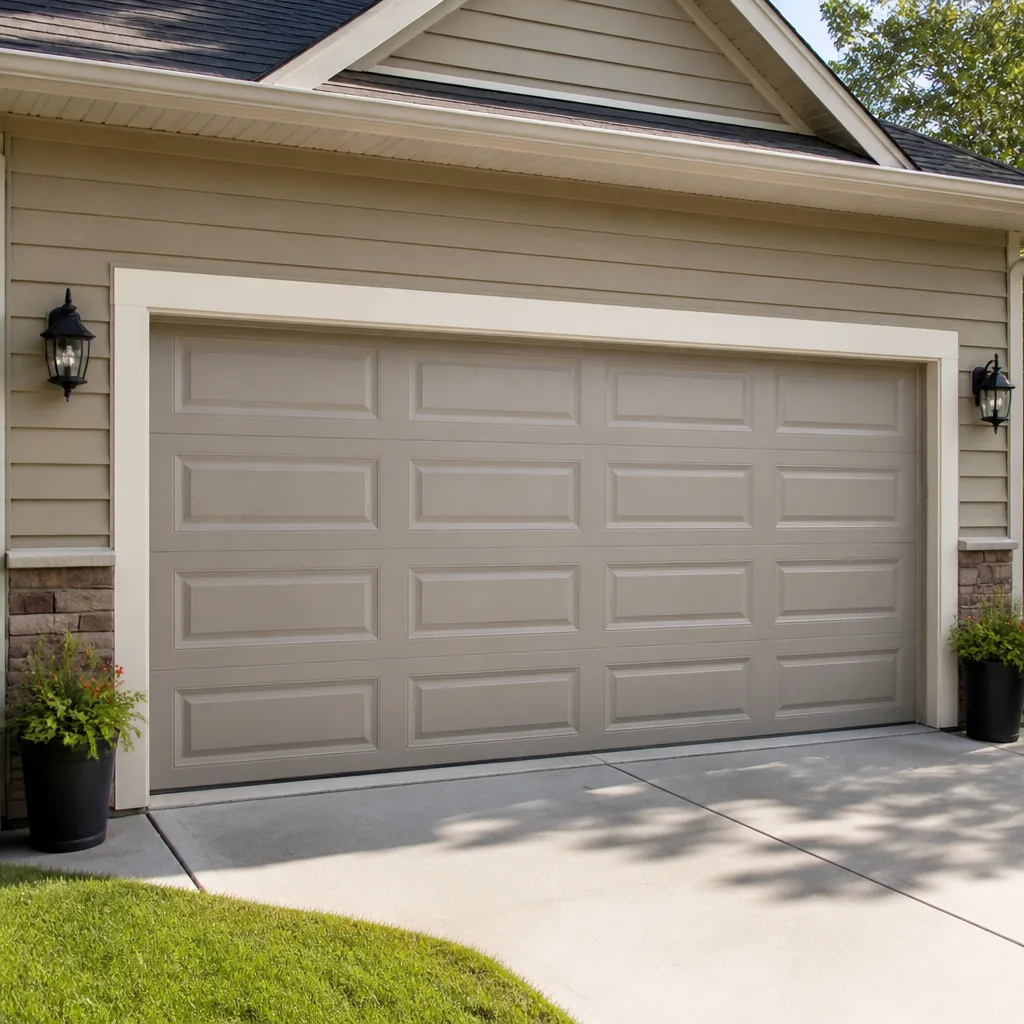 Raised-panel steel
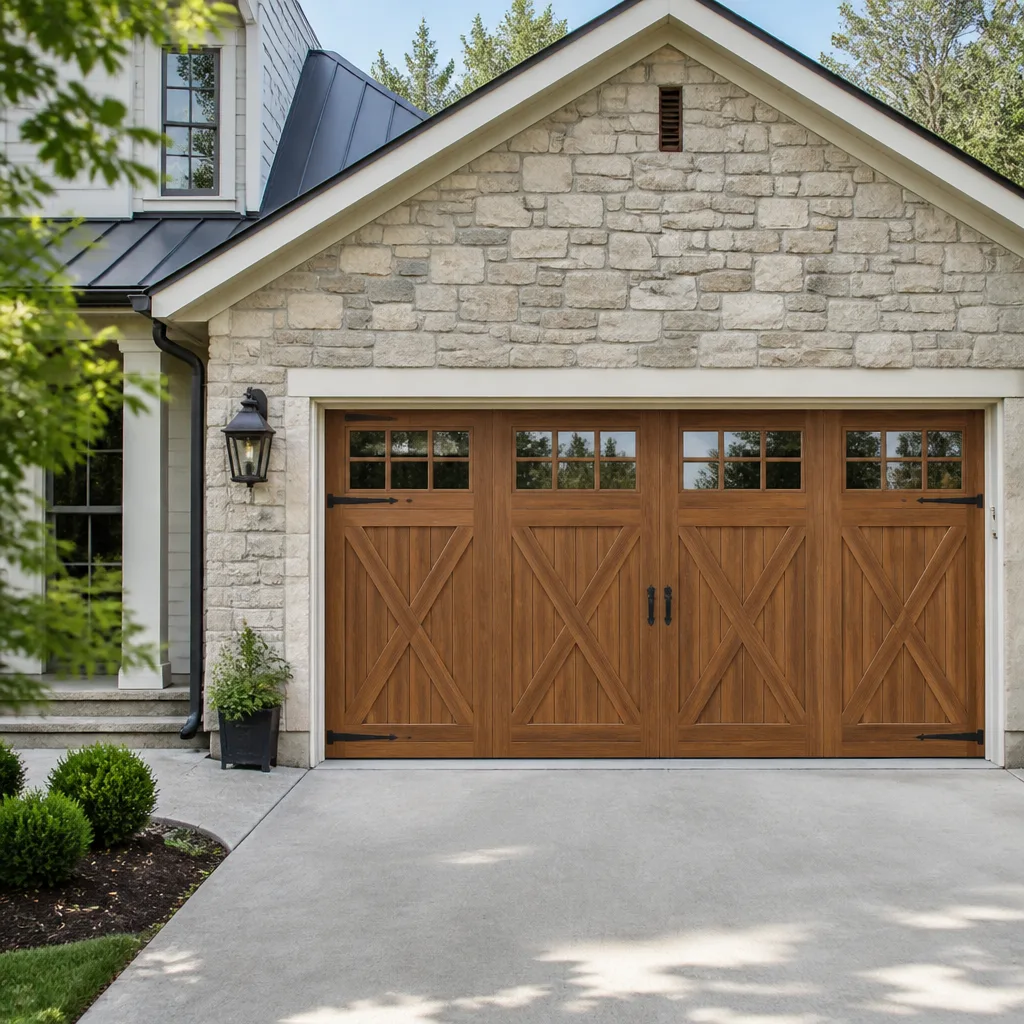 Carriage house
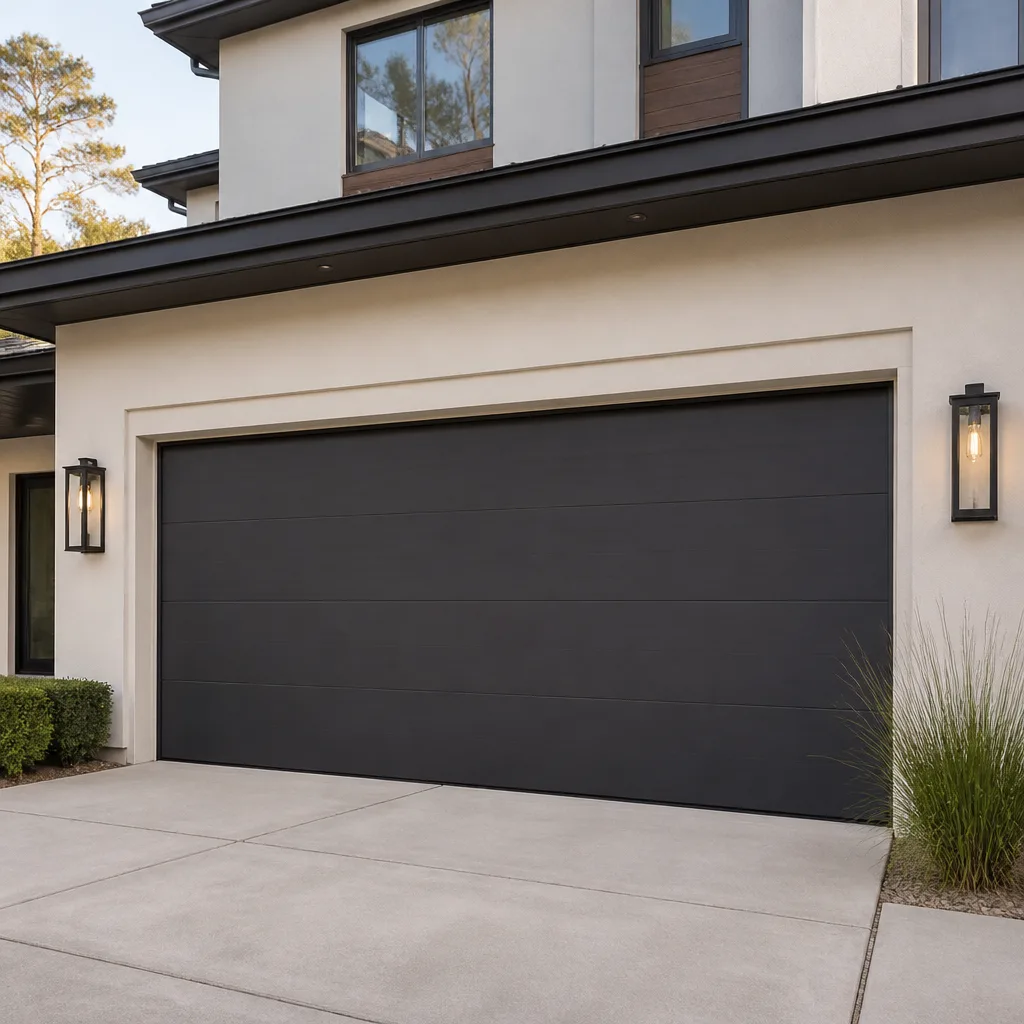 Modern flush
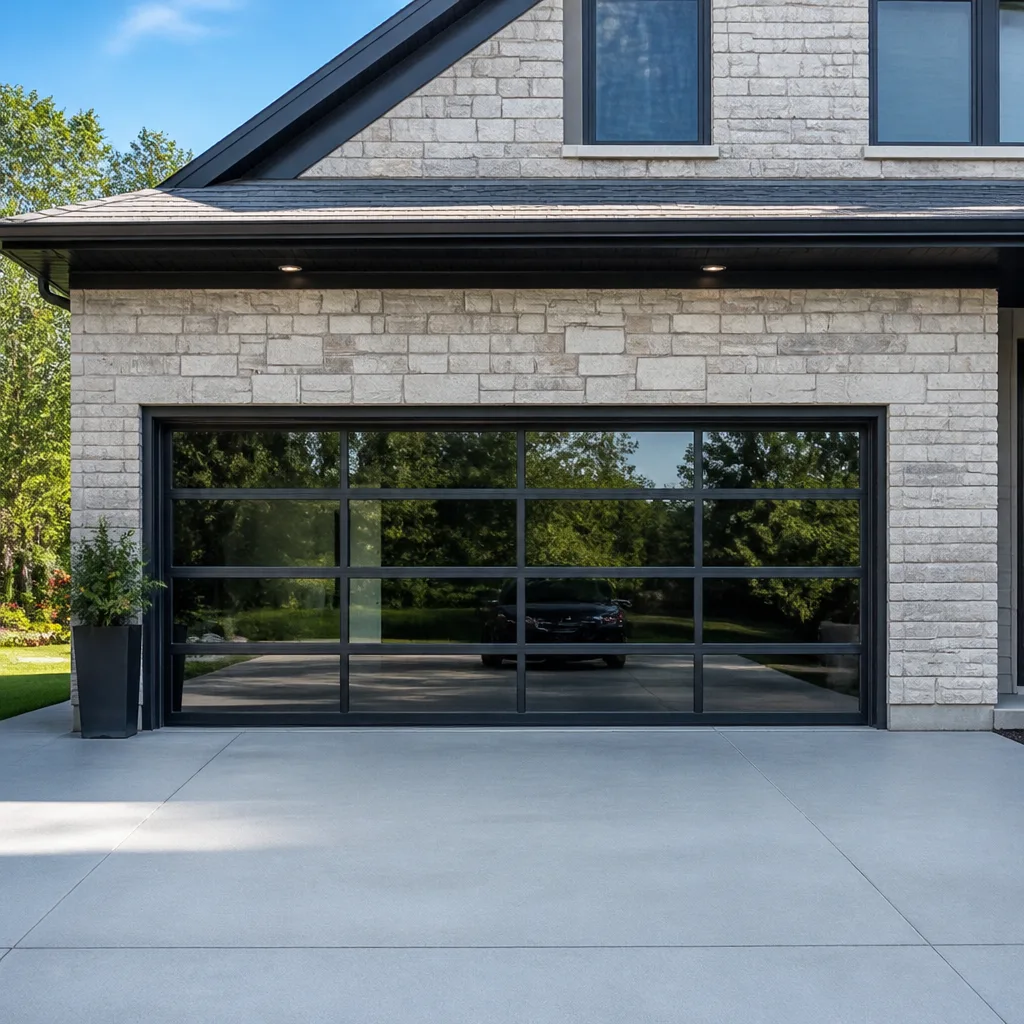 Full-view glass
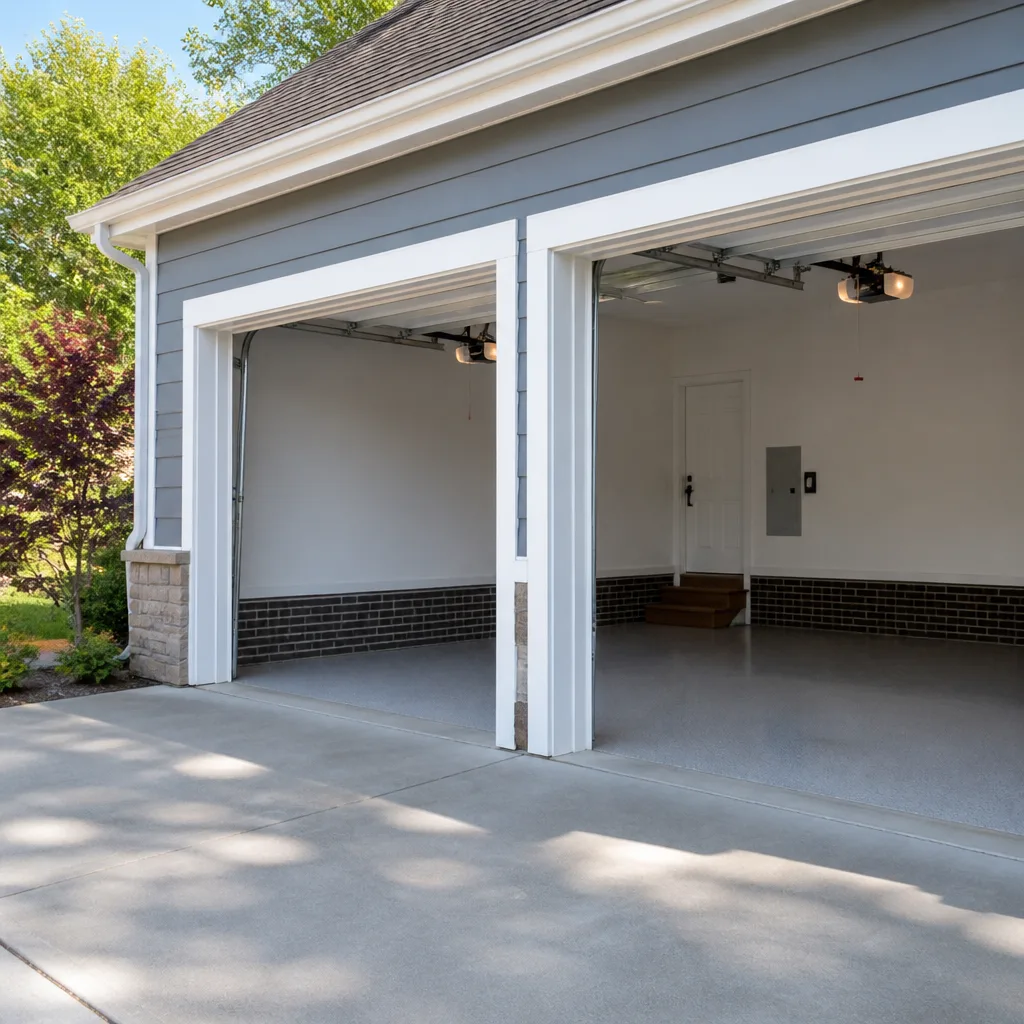 LiftMaster openers
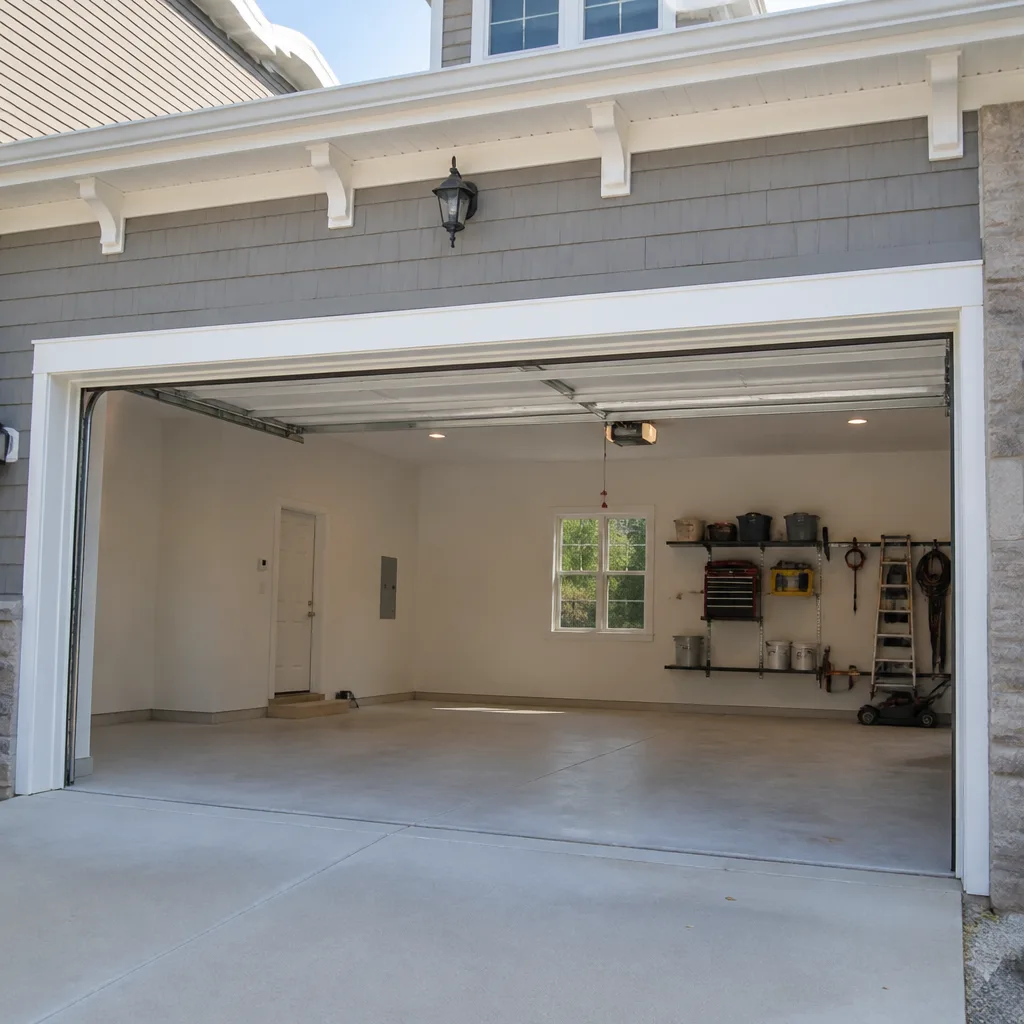 Chamberlain openers
Full 25-point door and opener safety check with every visit - springs, cables, rollers, tracks, and your LiftMaster or Chamberlain opener included
You get a price before we start. It does not change when the pro arrives.
Get your free estimateGarage Door Emergency Preparedness Guide for Ann Arbor Homes
Most garage door emergencies don’t start with a broken spring. They start with a door that won’t budge in weather nobody wants to stand in, and an owner who has never once looked at the manual release cord hanging a few inches above their head. In Ann Arbor, a February ice storm or a hard January freeze can turn a working door into a stuck one overnight, and the difference between being stranded and being operational usually comes down to what you did, or didn’t do, before the storm hit. This guide treats your garage door as infrastructure, not an appliance. You’ll learn how to find and test your manual release, what to keep on hand, how to handle a frozen door without snapping a cable, and when a problem belongs in the hands of a technician.
Quick Answer
Garage door emergency preparedness in Ann Arbor means three things: knowing how to use your manual release cord before you need it, keeping a short list of tools and parts on hand to stabilize a failed door, and understanding that a frozen or stuck door should never be forced, boiled, or pried. A door that fails in the open position needs to be secured immediately for security and weather reasons. A door that won’t open in a freeze is usually a frozen seal or a stalled opener, not a broken spring, and the fix is patience and a phone call rather than force.
Styles & brands we work with
- Raised-panel steel
- Carriage house
- Modern flush
- Full-view glass
- LiftMaster openers
- Chamberlain openers
Table of Contents
- Finding and Testing Your Manual Release Cord
- Power Outage Protocol: Battery Backup Openers
- The Frozen-Door Procedure That Prevents Cable Snap
- Securing a Door That Failed in the Open Position
- What to Keep on Hand
- How Garage Door Emergencies Actually Start in Ann Arbor
- When to Call a Professional
- Frequently Asked Questions
Finding and Testing Your Manual Release Cord
Every garage door opener with a trolley has a manual release, and it’s the single most important piece of emergency equipment in your garage. The cord is usually a red handle hanging from the trolley carriage, roughly six feet off the floor, near the center of the door’s track. In the dark at 5 a.m., you won’t find it by luck. You need to know where it is now.
Here’s how to find and test it correctly, using the most common opener setups in Ann Arbor homes:
- Close the door completely first. Never pull the release with the door up. The spring tension holding an open door is what makes a released door dangerous.
- Locate the trolley. The trolley is the carriage that rides along the rail from the opener head toward the door. The release cord hangs from it, usually with a red plastic or T-shaped handle.
- Pull straight down firmly. You should hear and feel the trolley disconnect from the carriage. On LiftMaster and Chamberlain units, this is a straightforward downward pull. On Genie and Craftsman openers, the release is the same motion, though the handle shape varies.
- Lift the door by hand. A properly balanced door should lift with moderate effort and stay up when you let go at about waist height. If it slams down or feels extremely heavy, the springs need attention and you should not use the door until a technician checks it.
- Reconnect the trolley. With the door fully closed, pull the release cord toward the door (away from the opener) until the carriage snaps back into the trolley. Run the opener once to confirm it re-engages.
If your door is on a Wayne Dalton or Raynor opener with a jackshaft or wall-mounted design, the release works differently and may be a lever or a chain hoist. If you can’t identify yours, that’s worth a service call before winter, not during it.
Power Outage Protocol: Battery Backup Openers
Ann Arbor winters bring ice storms that take down power lines, often for hours at a stretch. If your opener doesn’t have battery backup, a power outage means your door is a manual door until the grid comes back. That’s fine if you know how to release and lift it. It’s a problem if you don’t.
Battery backup openers solve this, and they’re worth considering for any Ann Arbor home where the garage is the primary entry. The key is understanding what “backup” actually covers. A backup battery runs the opener through a limited number of cycles, usually enough to get a car in or out a few times, not to run the door all day. Here’s how to evaluate whether yours will hold when it matters:
- Check the battery type. Most backup systems use a sealed lead-acid or lithium battery pack. Lithium holds charge longer in cold; lead-acid degrades faster in an unheated garage.
- Test it before winter. Unplug the opener from the outlet and run the door once. If it moves, the battery is holding. If it doesn’t, the battery needs replacing.
- Know the cycle limit. Backup batteries typically provide a handful of open/close cycles, not unlimited operation. Plan to use the manual release if the outage stretches.
- Keep the battery warm if you can. An unheated garage in a Michigan January is hard on batteries. Some homeowners relocate the backup unit to a warmer spot, but that’s a job for a technician, not a weekend project.
If you’re not sure whether your opener has backup, or your battery won’t hold a charge, our garage door opener repair team can check it and tell you straight whether you need a new battery or a new unit.
The Frozen-Door Procedure That Prevents Cable Snap
When a garage door freezes to the floor, the bottom seal bonds to the concrete. The opener pulls, the door doesn’t move, and something has to give. Usually it’s the cable, the spring, or the opener’s gear. Forcing a frozen door is how a $150 seal replacement turns into a several-hundred-dollar cable and spring repair.
Here’s the procedure that prevents secondary damage:
- Don’t run the opener repeatedly. If the door didn’t move the first time, it won’t move the fifth. Each cycle strains the opener and the springs.
- Release the door manually from the opener. Pull the release cord so the opener is disconnected from the door. This takes the motor out of the equation.
- Break the seal gently. Use a stiff plastic scraper or a wooden wedge at the bottom corners. Never use a metal pry bar against the seal or the panel.
- Never pour boiling water on the door or the seal. It can crack the seal, warp the panel, and refreeze into a worse bond. Warm (not hot) water on the concrete where the seal meets the floor is a safer option, applied sparingly.
- Never force the door up by hand while it’s still bonded. If the seal is still stuck, stop. A technician can free it without damage.
Once the door is free, apply a silicone-based lubricant to the bottom seal and the weatherstripping. That single step prevents most freeze bonds. In Ann Arbor, where freeze-thaw cycles run through February and March, a fall lubrication routine pays for itself.
Securing a Door That Failed in the Open Position
A door stuck open is a security problem and a weather problem at the same time. It’s also the one emergency you can usually handle yourself, without tools, before a technician arrives.
First, don’t try to force the door down if the spring or cable has failed. A door with a broken spring can come down hard and fast, and that’s a serious injury risk. Instead:
- Disconnect the opener so it can’t try to close the door on its own.
- Lower the door by hand only if it moves smoothly and you can control the weight. If it drops or feels uncontrollable, stop and leave it.
- If the door won’t close, secure the opening. A heavy-duty tarp or a sheet of plywood across the opening, braced from the inside, keeps weather and animals out.
- For security, a C-clamp on the vertical track just above a roller prevents the door from being lifted from outside. This is a temporary measure, not a fix.
If the door won’t come down at all, call for garage door repair. A door stuck open in an Ann Arbor January is a frozen-pipe risk as much as a security one.
What to Keep on Hand
You don’t need a full toolbox to stabilize a door until help arrives. You need a short list of items that let you act safely without making things worse. Here’s what we recommend every Ann Arbor homeowner keep in the garage:
- A stiff plastic scraper or wooden wedge for freeing a frozen seal
- A silicone-based lubricant for seals, rollers, and hinges
- A C-clamp that fits your vertical track (for securing a door that won’t close)
- A heavy-duty tarp and a couple of bungee cords for covering an open doorway
- A flashlight that lives in the garage, not the house
- Your opener’s manual, or the model number written on a sticker inside the opener head
That last item matters more than people think. When you call, knowing whether you have a LiftMaster, a Chamberlain, a Genie, or a Craftsman saves time and helps the technician bring the right parts. We work on whatever brand is on your door, and a model number makes the first visit count.
How Garage Door Emergencies Actually Start in Ann Arbor
In our experience, most garage door emergencies in Ann Arbor don’t begin with a dramatic failure. They begin with a door that’s been telling you something for weeks and nobody listened.
The pattern is consistent. A door starts running a little louder in November. The bottom seal starts sticking in December. The opener hesitates for half a second before it lifts. By the time a real freeze hits, the door is already marginal, and the cold is just the trigger.
The Ann Arbor climate works against garage doors in specific ways. Freeze-thaw cycles through the winter expand and contract the concrete floor, which shifts the bottom seal and can throw the door slightly out of alignment. Road salt tracked in on tires corrodes hinges and rollers faster than most homeowners expect. And the long, cold stretches mean springs are under constant tension in temperatures that make metal brittle.
The preparedness mindset is simple: treat the door as infrastructure. Check it in the fall, lubricate it before the first freeze, test the manual release, and replace the backup battery before it fails. That’s the whole program. A door that’s maintained doesn’t become an emergency, and an emergency you’ve prepared for is an inconvenience rather than a crisis.
See the difference
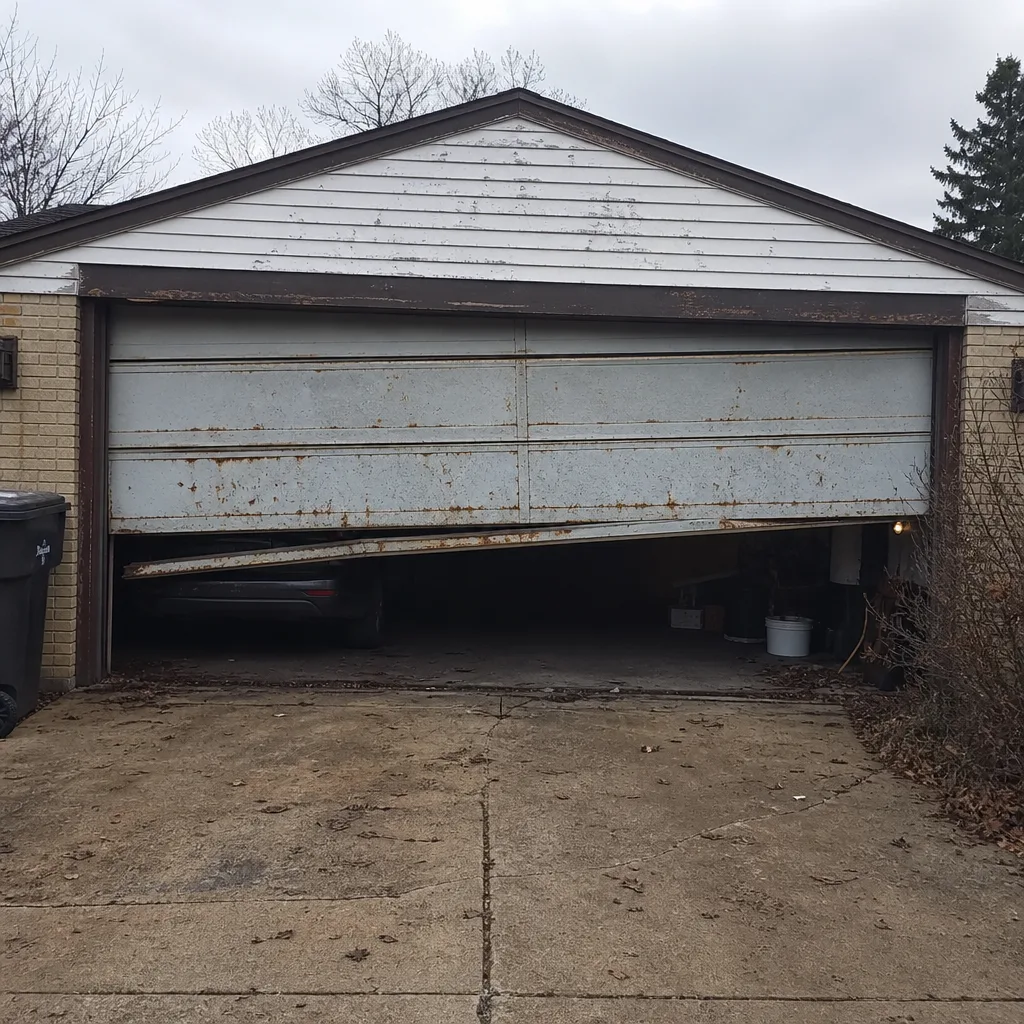 Before
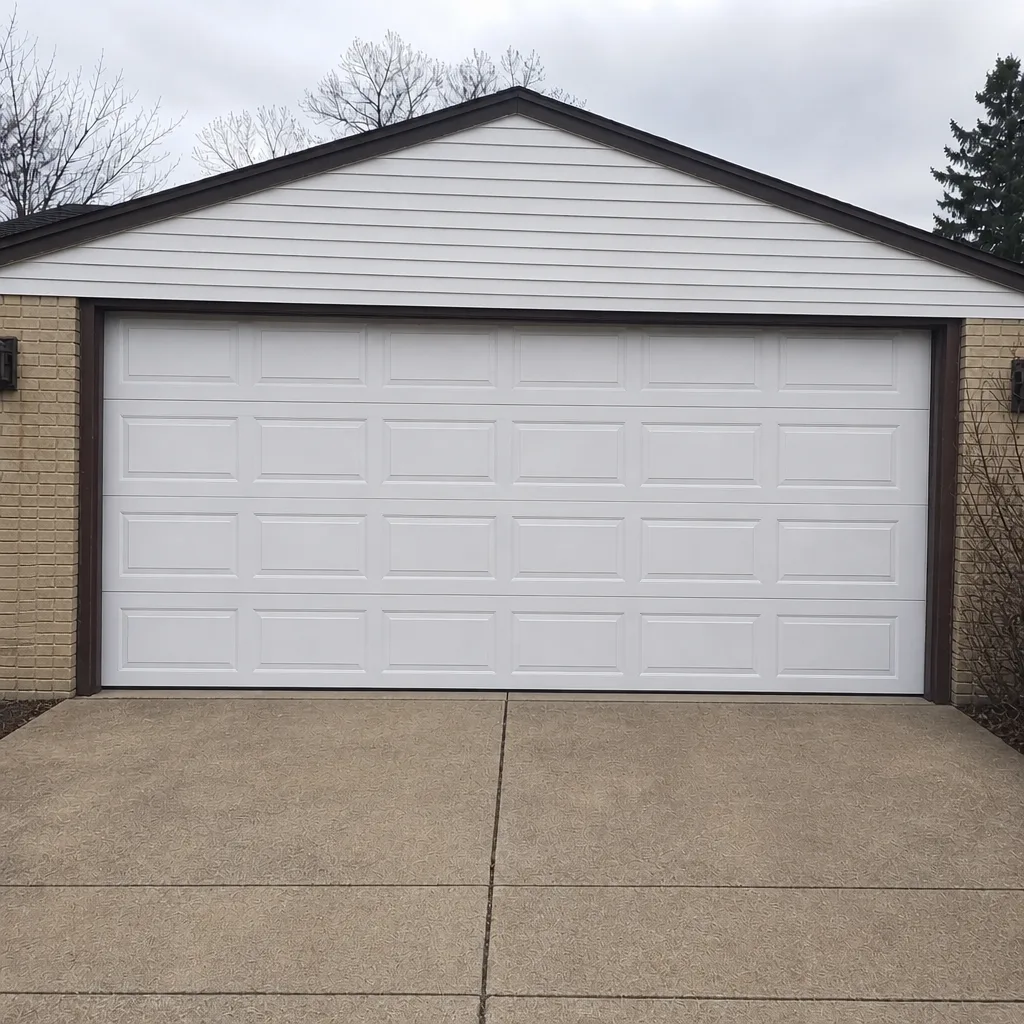 After
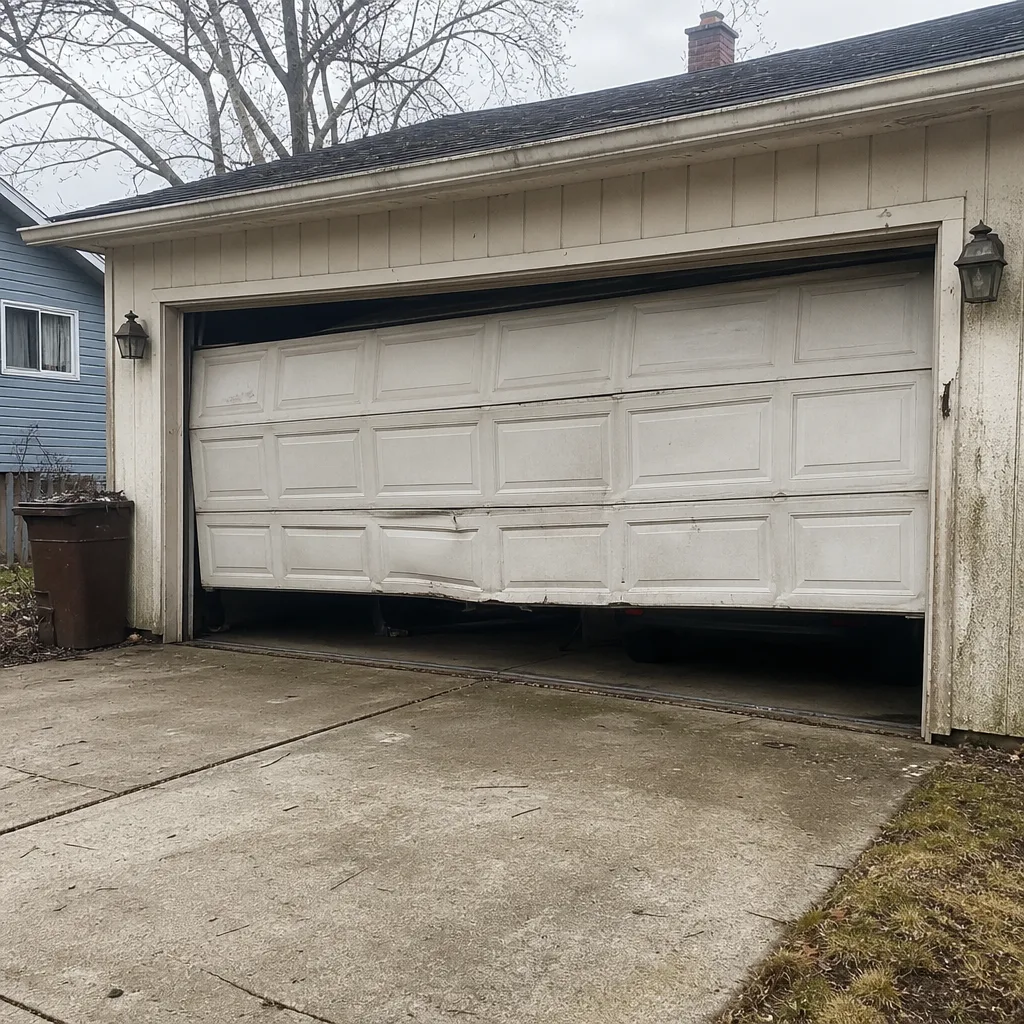 Before
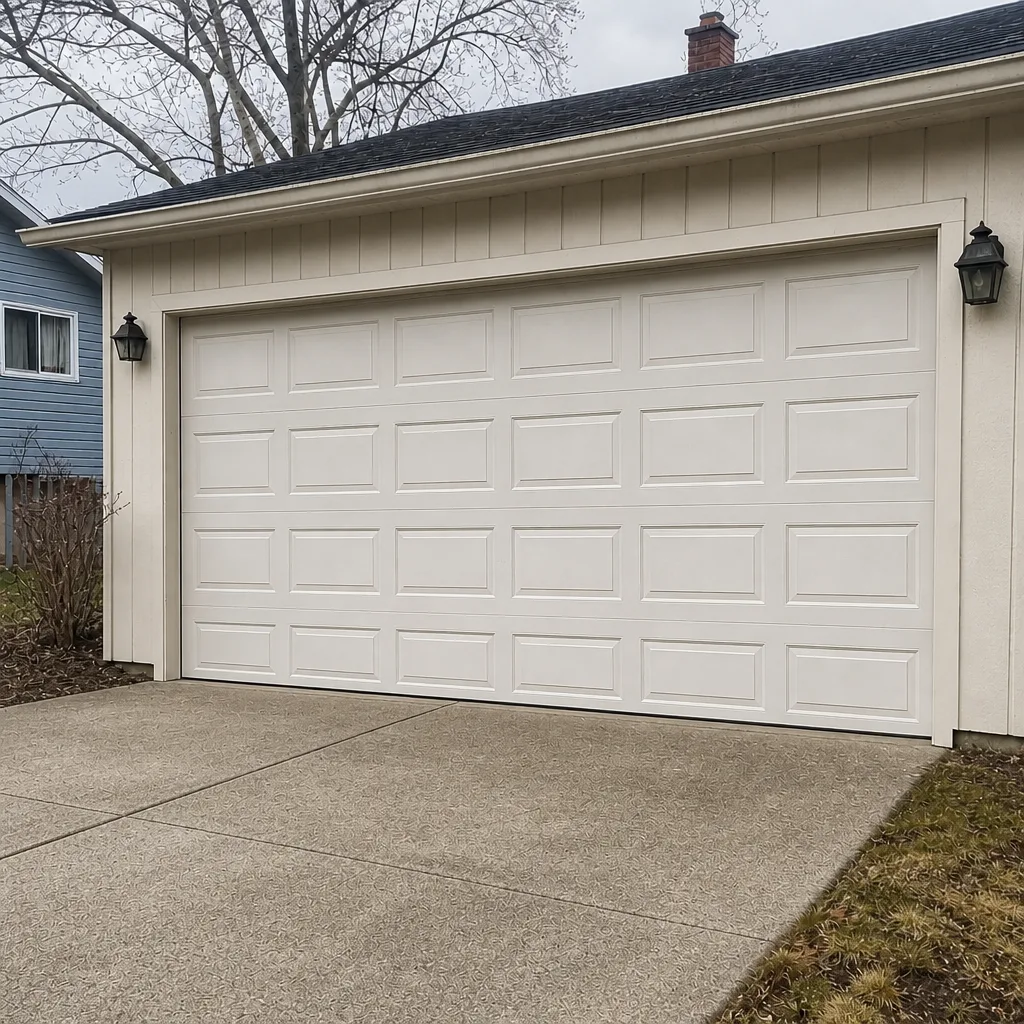 After
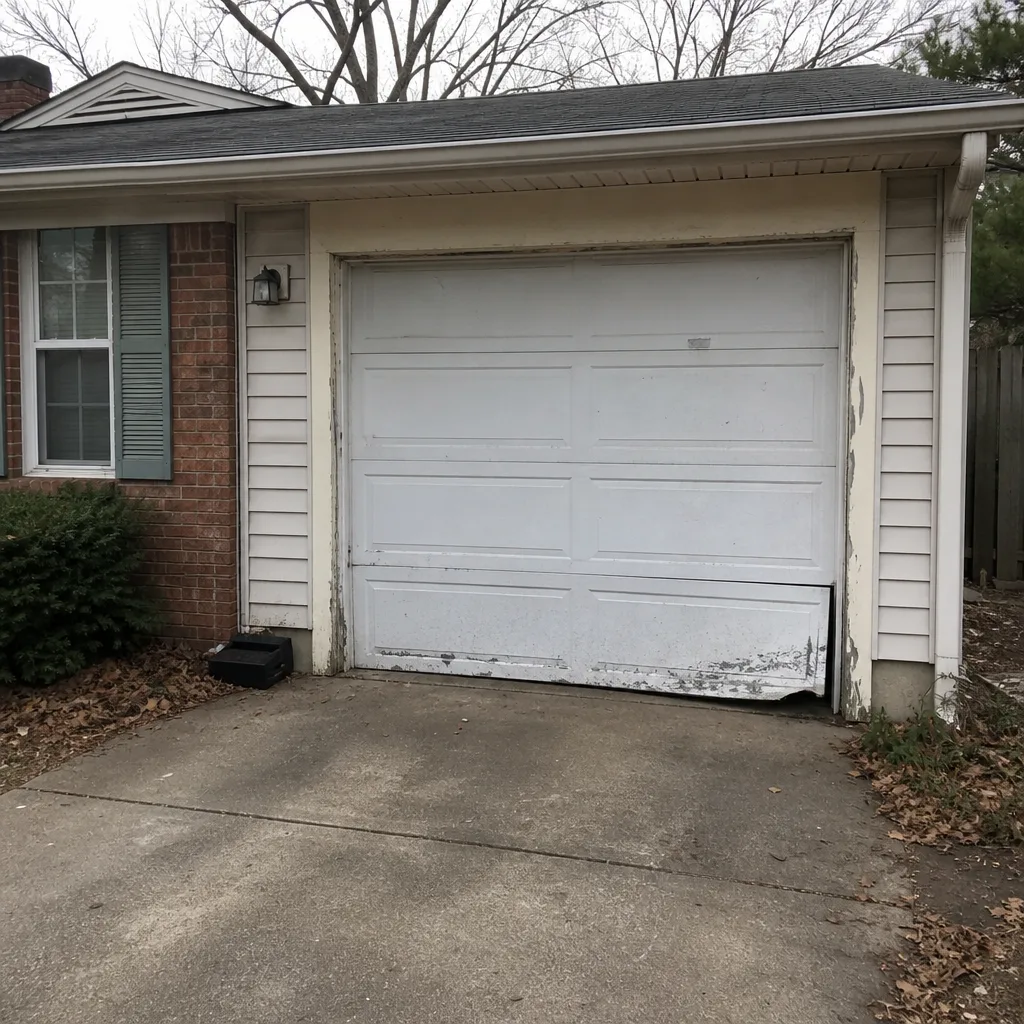 Before
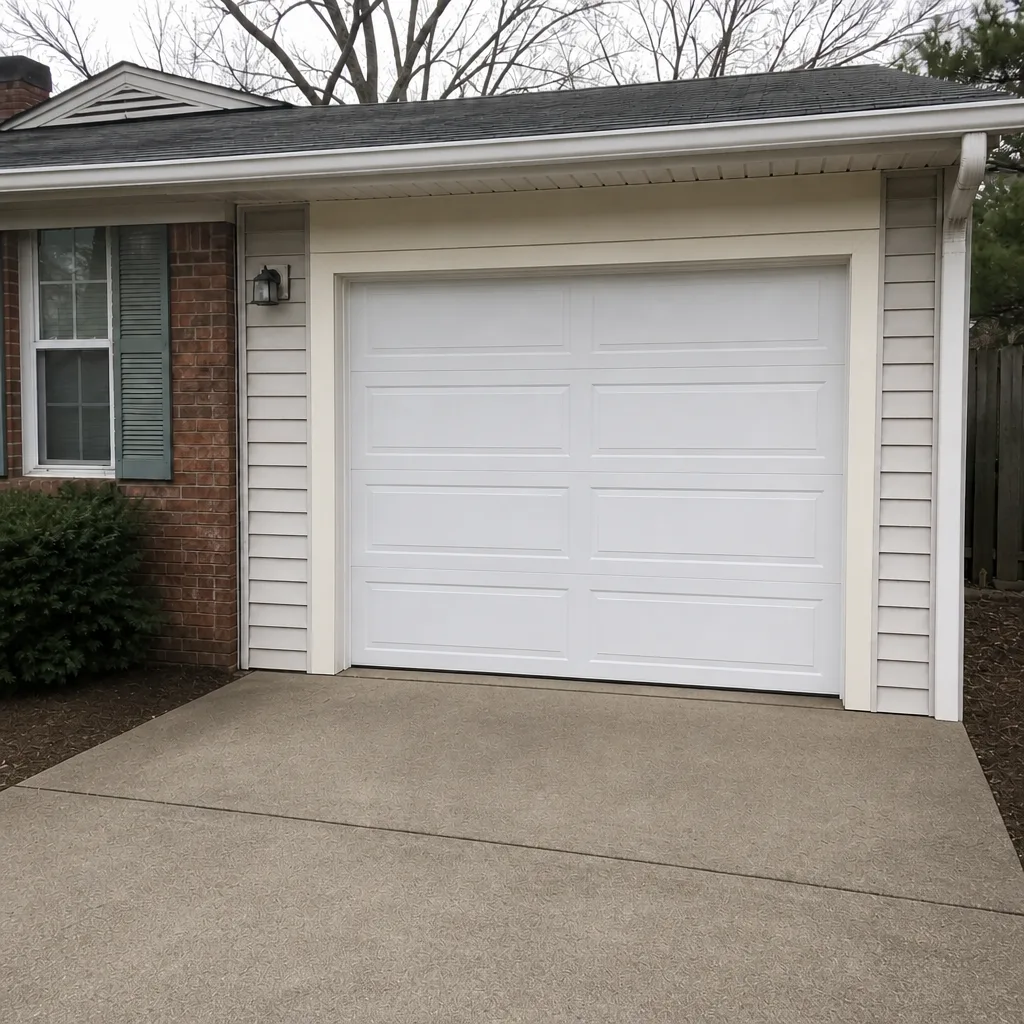 After
Common Mistakes to Avoid
- Pulling the manual release with the door open. The door can come down uncontrolled. Always release with the door fully closed.
- Pouring boiling water on a frozen door. It cracks seals, warps panels, and refreezes. Use warm water sparingly on the concrete, not the door.
- Running the opener repeatedly on a stuck door. Each cycle strains the motor and springs. If it didn’t move once, stop and diagnose.
- Forcing a door with a broken spring. A door with a failed spring can drop fast. Don’t try to lift or lower it by hand. Call a technician.
- Ignoring a door that’s getting louder. Noise is the door telling you something is wearing. A fall check catches it before winter does.
- Skipping the backup battery test. A battery that isn’t tested is a battery you can’t count on. Unplug the opener and run the door once before winter.
- Letting a door sit open overnight. In an Ann Arbor winter, an open garage can freeze pipes and invite pests. Secure it the same day it fails.
When to Call a Professional
Some garage door problems are safe to handle yourself. Others aren’t. Call a professional if a spring is broken, if a cable is frayed or snapped, if the door won’t stay up when you lift it by hand, if the opener runs but the door doesn’t move, or if a door is stuck open and you can’t secure it. Springs and cables are under extreme tension, and a mistake there can cause serious injury. Don’t try to replace or adjust them yourself.
Sage Garage Door Repair offers free estimates in Ann Arbor. Our technicians have up to 12 years of experience and work on whatever brand is on your door, from Amarr and Wayne Dalton to Craftsman and Raynor. Call (888) 359-3230. We answer 24/7. Fast dispatch from 7am to 7pm, Sunday through Friday.
Frequently Asked Questions
Pull the manual release cord hanging from the trolley, then lift the door by hand. The cord is usually a red handle about six feet off the floor. Release it only with the door fully closed, and reconnect the trolley before running the opener again. If your door is too heavy to lift, the springs need attention and you should call a technician.
Yes, for most homes where the garage is the primary entry. Ann Arbor ice storms can knock out power for hours, and a backup battery keeps the door operational for a limited number of cycles. Test it before winter by unplugging the opener and running the door once. Call (888) 359-3230 if you need a battery or opener check.
Don’t force it and don’t pour boiling water on it. Release the door from the opener, free the seal gently with a plastic scraper or wooden wedge, and apply silicone lubricant once it’s free. If the seal is still bonded, stop and call a technician. Forcing a frozen door is how cables snap and springs break.
No. Garage door springs are under extreme tension and can cause serious injury if handled incorrectly. This is one of the few home repairs that should always go to a trained professional. Call (888) 359-3230 for a free estimate on spring repair in Ann Arbor.
Disconnect the opener so it can’t try to close the door, then lower the door by hand only if it moves smoothly and you can control the weight. If it won’t close, cover the opening with a tarp or plywood braced from inside, and use a C-clamp on the vertical track above a roller to prevent the door from being lifted from outside. Call us the same day.
Yes. We work on whatever brand is on your door, including LiftMaster, Chamberlain, Genie, Clopay, Amarr, Wayne Dalton, Craftsman, and Raynor. Our recommendations are based on what your door actually needs, not on which product line we’d prefer to sell. Call (888) 359-3230 for a free estimate.
The Bottom Line
Garage door emergencies in Ann Arbor are rarely sudden. They’re the result of a door that’s been marginal for weeks, hit by a freeze that finally pushed it over. Preparedness is simple: know where your manual release is, test it before winter, keep a short list of tools on hand, lubricate the seals before the first freeze, and test your backup battery while the power is still on. A door that fails in the open position can be secured yourself. A broken spring or a snapped cable cannot. Know the difference, and call a professional for the rest.
For anything beyond a frozen seal or a stuck trolley, Sage Garage Door Repair is here to help. We handle repair, opener repair, and full installation, working on whatever brand is on your door. Our technicians have up to 12 years of experience, and we give a straight answer, not a sales pitch. Call (888) 359-3230 for a free estimate. We answer 24/7. Fast dispatch from 7am to 7pm, Sunday through Friday. Learn more about our Sage Garage Door Repair team and our Ann Arbor service area.
Written by the team at Sage Garage Door Repair.