
Last updated November 15, 2026
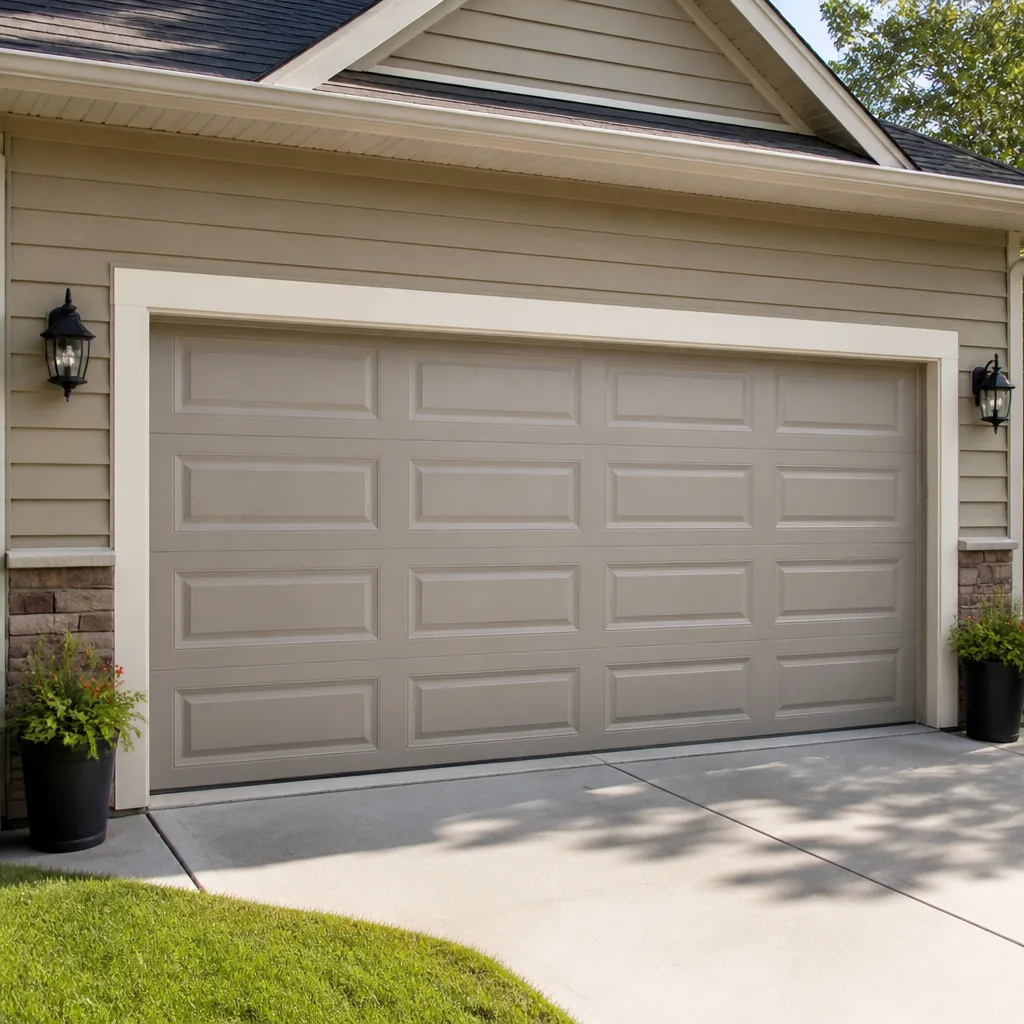 Raised-panel steel
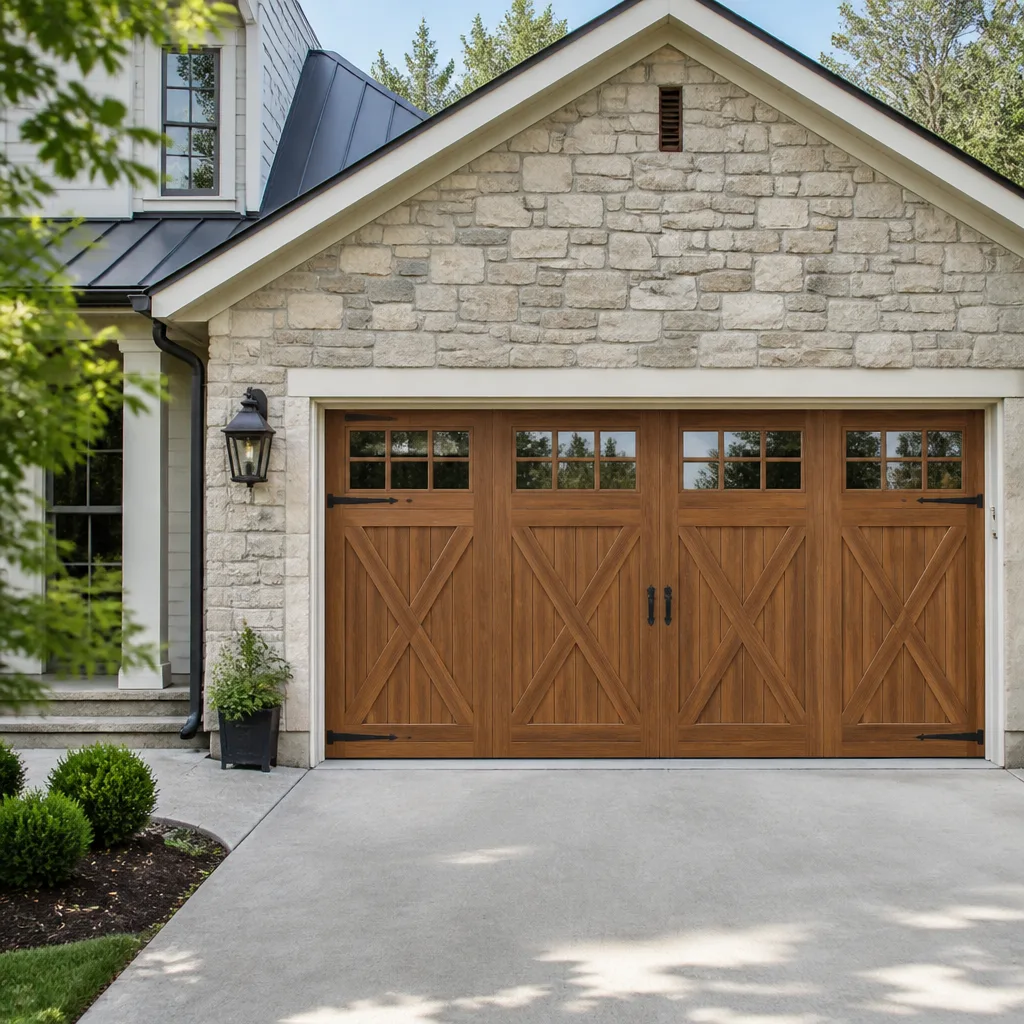 Carriage house
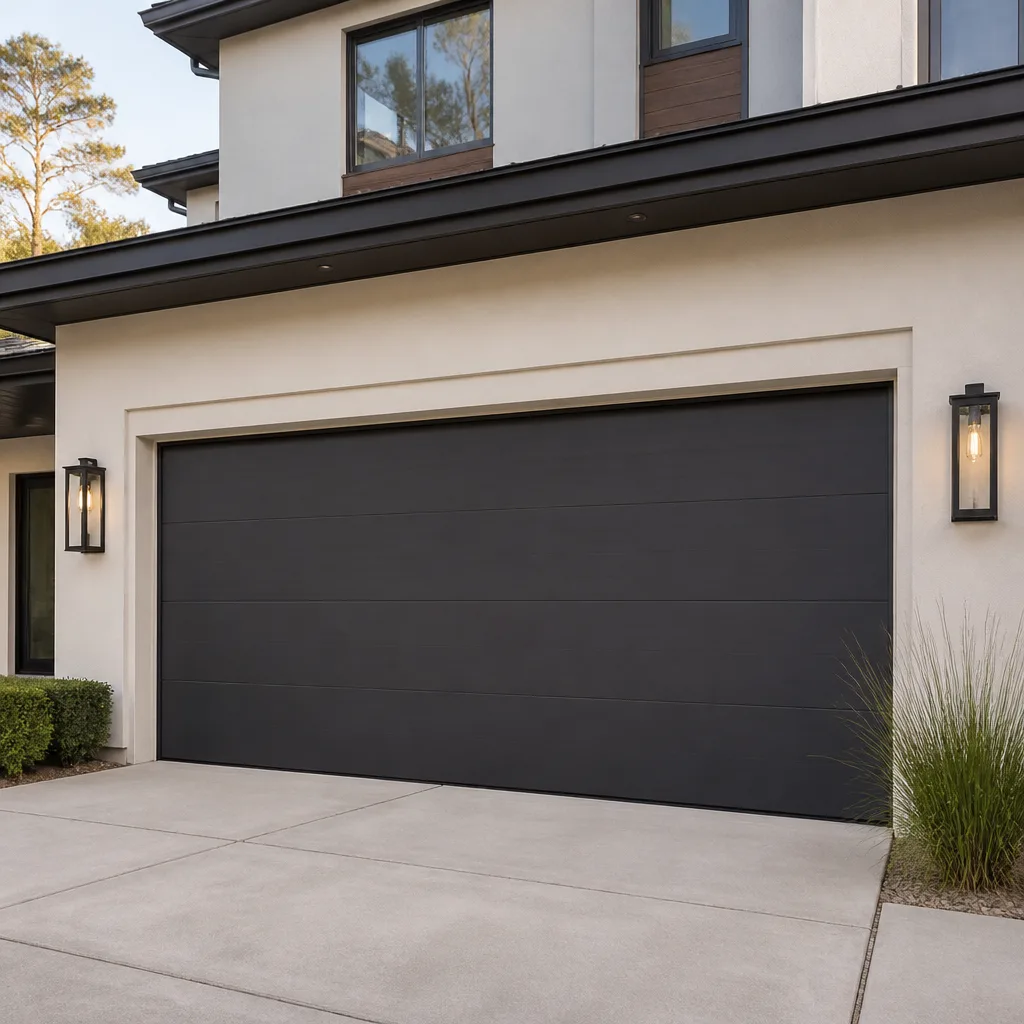 Modern flush
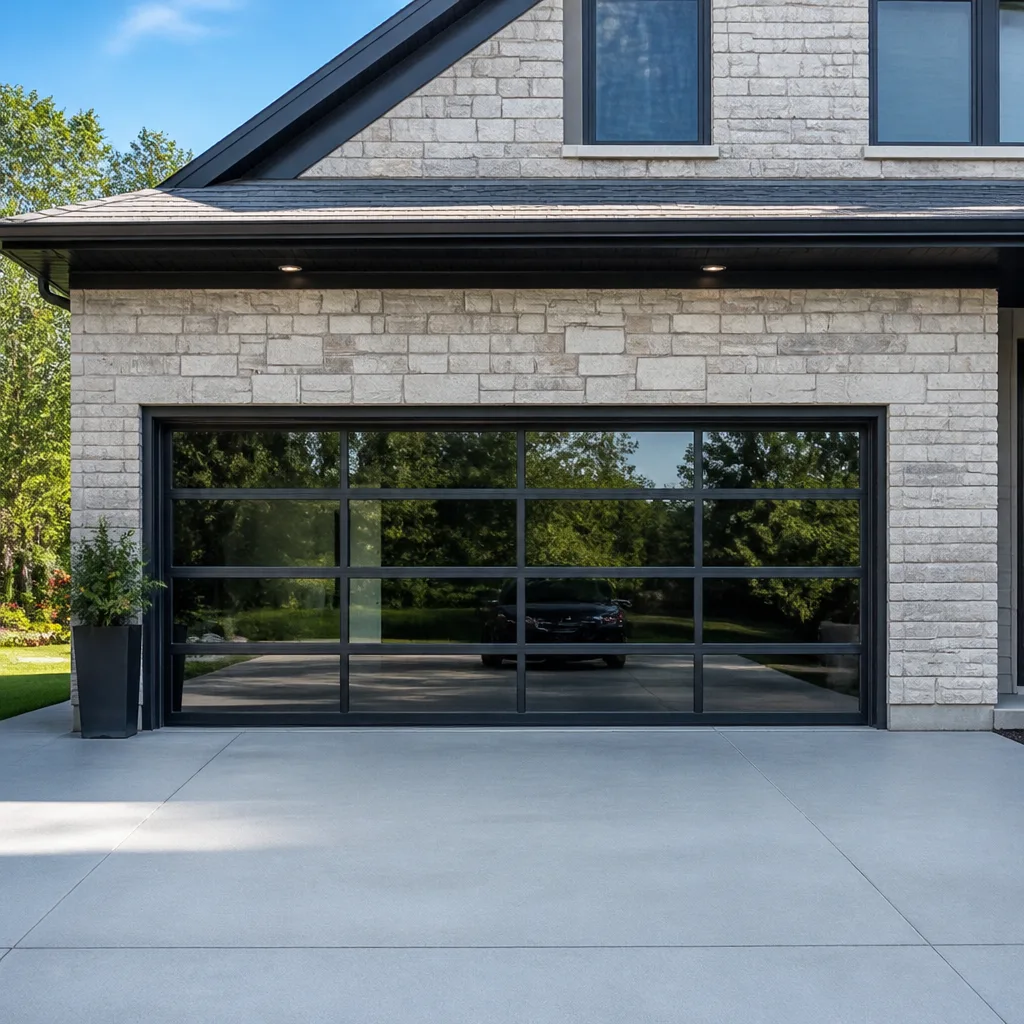 Full-view glass
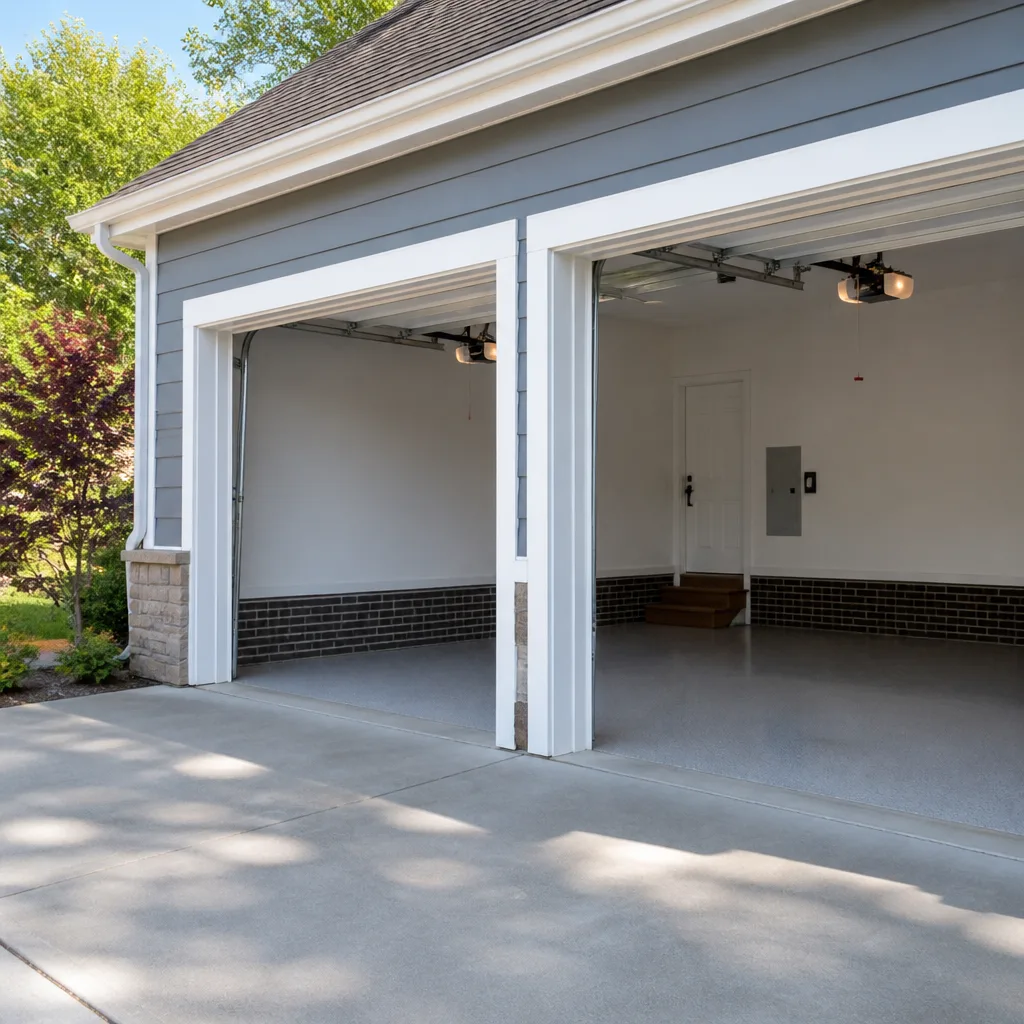 LiftMaster openers
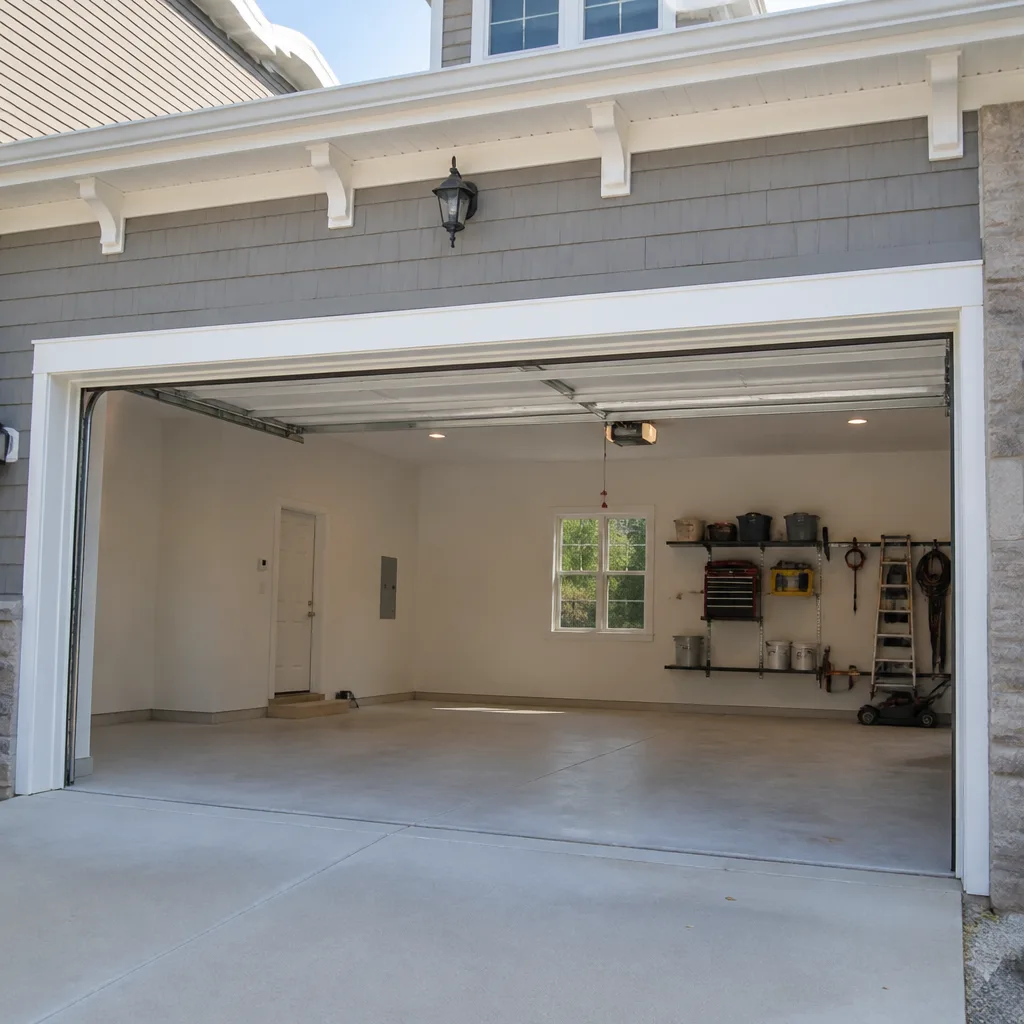 Chamberlain openers
Full 25-point door and opener safety check with every visit - springs, cables, rollers, tracks, and your LiftMaster or Chamberlain opener included
You get a price before we start. It does not change when the pro arrives.
Get your free estimateGarage Door Repair Troubleshooting in Ann Arbor: Common Problems and How to Fix Them
A snapped cable looks like a cable problem. Usually it’s a spring problem that finally ran out of patience. That single distinction sits behind a good share of the service calls we handle around Ann Arbor, and getting it backwards means you pay for the wrong repair first. A door that won’t lift is not always a broken opener. A grinding noise is not always a dying motor. The parts on a garage door work as a system, and the part that fails is often not the part making the noise. In this guide we walk through how to read the whole door, separate a single fix from cascading wear, and know which jobs are safe to handle yourself and which ones need a trained technician.
Quick Answer
Most garage door problems in Ann Arbor trace back to one of four failures: a broken torsion spring, a snapped or jumped cable, worn rollers and hinges, or an opener that’s lost its logic or limits. The fastest way to sort them is a manual-lift test with the opener disconnected – if the door lifts easily and stays put, the problem is the opener; if it’s heavy, crooked or stuck, the problem is the door itself. Springs, cables and cable drums carry stored tension and should only be handled by a trained technician, while lubrication and photo-eye alignment are genuinely safe to do yourself.
Styles & brands we work with
- Raised-panel steel
- Carriage house
- Modern flush
- Full-view glass
- LiftMaster openers
- Chamberlain openers
Table of Contents
- Read the Whole Door, Not the Broken Part
- The Manual-Lift Test: Spring, Cable or Opener?
- Distinguishing Spring Failure from Cable Failure
- How Michigan Freeze-Thaw Cycles Hit Your Door
- The “One Problem or Three” Diagnostic Framework
- What’s Safe to Fix Yourself and What Isn’t
- Opener Problems: When It’s the Motor and When It’s the Logic
- How to Describe the Problem Before You Call
Read the Whole Door, Not the Broken Part
A garage door is a balanced machine. The springs hold the weight, the cables transfer that tension to the bottom corners, the rollers guide the panels along the tracks, and the opener only supplies a small nudge to start and stop the movement. When one of those parts wears out, the symptom often shows up somewhere else. A binding roller makes the opener strain and overheat. A weak spring makes the cables slap and fray. A misaligned track makes the door crooked, which wears the rollers down faster, which strains the opener further.
That’s why reading only the broken part is a mistake. In our experience, homeowners who call about a “broken opener” are often describing a door that’s dragging because of a worn hinge three panels up. The opener is doing what it’s told; it’s just being asked to lift a door that no longer moves freely. Diagnosing a garage door problem correctly in Ann Arbor starts with watching the whole system move.
What to watch during a full cycle
- Does the door lift evenly, or does one side lag behind the other?
- Do the rollers stay in their tracks, or do they pop partway out at a certain panel?
- Does the opener sound strained at a specific point in the travel?
- Does the door stop and reverse before it reaches the floor, or reverse halfway up?
- Are the panels staying level, or is the door sagging on one side?
If you can answer those five questions before you call, you’ll give a technician a much clearer picture than “it’s not working.” If you’d rather have someone diagnose it in person, our garage door repair team can take it from there.
The Manual-Lift Test: Spring, Cable or Opener?
The single most useful diagnostic step you can take is a manual-lift test. It separates door problems from opener problems in about two minutes, without tools and without touching a spring. Do it with the opener disconnected so you’re feeling the door’s own weight and balance, not the motor’s effort.
How to run the manual-lift test
- Close the door fully and pull the red emergency release cord to disconnect the opener. On most openers, like LiftMaster or Chamberlain units, this disengages the trolley from the door arm.
- Stand to the side of the door, not underneath it, and lift the door by the bottom handle with both hands.
- Feel how much effort it takes. A properly balanced door should lift with one hand and stay put wherever you leave it.
- Let go at about halfway up. A balanced door holds its position. A door with a broken spring will drop or feel extremely heavy.
- Lower the door gently and re-engage the opener by running it until the trolley reconnects.
What the results mean
- The door feels light and stays put: the door itself is balanced. The problem is in the opener, the remote, the wall switch, the safety sensors or the logic board.
- The door is very heavy or won’t stay up: the springs have failed or lost tension. Stop here and call a technician – don’t keep lifting it.
- The door lifts crooked or binds on one side: a cable has jumped or snapped, or a roller has come out of its track. Don’t force it.
- The door lifts but the opener won’t run: the door is fine; diagnose the opener and its safety circuit.
That result alone will tell you whether you need repair on the door or repair on the opener. In Ann Arbor, that distinction can save you a wasted service call.
Distinguishing Spring Failure from Cable Failure
Springs and cables fail together so often that homeowners regularly mistake one for the other. And it matters, because the repair approach is different. A spring is the energy source. A cable is the messenger that carries spring tension to the door’s bottom corners. When the spring snaps, the cable suddenly goes slack. When the cable snaps, the spring is intact but has nothing to pull against.
Signs of spring failure
- A loud bang from the garage, often described as sounding like a gunshot
- A visible gap in the spring coil above the door (torsion) or a stretched, separated spring on the side (extension)
- The door feels extremely heavy on the manual-lift test
- The door opens a few inches and stops, or the opener strains and reverses
Signs of cable failure
- The door hangs crooked, one corner visibly lower than the other
- A cable is visibly off its drum, frayed, or hanging loose along the side of the door
- The door is stuck open or stuck closed and won’t move at all
- You can see the cable wrapped loosely around a drum or off the pulley entirely
The order of diagnosis matters. If the cable is off the drum, it’s usually because a spring broke first and the drum lost tension. Replacing the cable without addressing the spring wastes the repair. Our technicians have up to 12 years of experience reading these paired failures, and we treat them together whenever one caused the other.
Springs and cables both carry stored tension that can cause serious injury. Don’t try to reattach a cable to a drum or wind a spring yourself, even if it looks simple on a video. Just note what you see and stop there.
How Michigan Freeze-Thaw Cycles Hit Your Door
Ann Arbor winters do something to garage doors that dry climates don’t. The freeze-thaw cycle is the main culprit. Water gets into the small gaps around hinges, rollers, tracks and the bottom seal, then freezes overnight. When it thaws, the moisture works a little deeper. Repeat that dozens of times between November and March, and metal parts that were snug in October are loose or warped by spring.
What freeze-thaw does to a door
- Tracks warp and shift: the vertical and horizontal tracks on your door can pull slightly out of alignment as moisture freezes around the mounting brackets. A door that was smooth in fall starts to bind at the curve in January.
- Rollers wear faster: cold stiffens the lubricant inside the roller bearings, and the grit that comes with road salt and snow gets ground into the tracks. Nylon rollers crack in cold weather; steel rollers wear out their bearings faster than they would in a mild climate.
- Bottom seals crack: the rubber weather seal at the bottom of the door hardens and splits, letting in water that feeds the cycle.
- Hinges loosen: the metal expands and contracts with temperature swings, and hinge screws back out over the season.
What does that mean for you? The door that worked all summer will probably need more attention in March than it did in September. Ann Arbor homeowners typically see their worst garage door wear after a hard winter. A lubrication pass in fall and a check in early spring goes a long way toward preventing the call.
The “One Problem or Three” Diagnostic Framework
Not every symptom is a single fix. Some are one part doing its job badly, and some are cascading wear that started months ago. Getting this distinction right means you don’t pay for a repair twice, and it means a technician doesn’t replace a part that wasn’t the problem.
Single-problem signs
- The door works smoothly except for one specific symptom (a noise, a hesitation at one point, one remote that doesn’t work)
- The symptom appeared suddenly and the rest of the door’s behavior is unchanged
- Nothing else on the door looks visibly worn or loose
Cascading-wear signs
- The door is louder, slower and crooked all at once
- The opener has started straining and the door also drags in one track
- You’ve already replaced an opener part and the door still doesn’t run smoothly
- Rollers look visibly worn, hinges have loosened, and the bottom seal is shot
When you see cascading-wear signals, it’s worth getting the whole door looked at rather than asking for the specific part to be swapped. A package of small repairs done at once is usually less work than three separate calls, and it gets to the root of the problem. We’ve seen plenty of Ann Arbor garage doors where the “one thing” a homeowner called about turned out to be the third part of a chain that started with a stiff roller.
If you’re seeing more than one symptom, describe all of them when you call. Sage Garage Door Repair offers free estimates in Ann Arbor, so getting the whole door assessed doesn’t cost more than getting one part looked at.
What’s Safe to Fix Yourself and What Isn’t
We’re not going to tell you everything on a garage door is dangerous, because that’s not true. Plenty of maintenance genuinely belongs in a homeowner’s hands, and doing it extends the life of the door. But a few components carry enough stored energy that no homeowner should touch them, and it’s worth being clear about which is which.
Safe to do yourself
- Lubrication: apply a garage-door-specific lubricant to the hinges, rollers, springs and pivot points. Do this twice a year, especially before winter.
- Photo-eye alignment: if the door reverses immediately after starting to close, check that the two safety sensors on either side of the door are pointed at each other and that the indicator lights are on. Wiping the lenses and nudging the brackets back into line is fine.
- Tightening visible hinge screws: a screwdriver on loosened hinge screws is safe and useful.
- Wiping down tracks and rollers: a dry cloth on the tracks is safe. Don’t use grease on the tracks themselves.
Not safe to do yourself
- Torsion springs and extension springs: these hold the full weight of the door under tension. Touching them without the right tools and technique can cause serious injury.
- Cables and cable drums: the cables carry the same tension as the springs. Reattaching a cable to a drum is a technician’s job.
- Track realignment with the door up: adjusting a track while the door is raised can cause the door to drop.
- Opener logic boards and capacitors: the opener is plugged into wall power. Anything beyond the battery on the remote or the wall switch belongs to a technician.
That’s not a scare tactic. It’s the honest line. Do the lubrication and the sensor checks, and let a trained technician handle anything with stored tension.
Opener Problems: When It’s the Motor and When It’s the Logic
Openers are the most failure-prone part of the system, and they fail in two very different ways. Sometimes the motor itself is done. Sometimes the motor is fine and the logic, limits or safety circuit is misbehaving. Knowing which you’re dealing with tells the technician where to look first. We treat garage door opener repair as its own specialty for exactly this reason.
Motor-failure signs
- The opener hums but the door doesn’t move
- The opener grinds loudly but the trolley doesn’t travel
- The motor runs briefly and stops, then won’t start again even after a cool-down
- A burning smell from the opener housing
Logic, limit and safety-circuit signs
- The opener doesn’t respond to the remote but does respond to the wall switch (or vice versa)
- The door reverses immediately after starting to close
- The door stops at the wrong point in its travel
- A Genie or Chamberlain unit beeps and flashes a specific code
- The opener runs on the wall switch but the remotes need re-pairing
How to check the safety circuit first
- Look at the two safety sensors at the bottom of the door tracks. Both should have a solid indicator light.
- Wipe the sensor lenses with a dry cloth.
- Check that nothing is blocking the line of sight between the sensors – a broom handle, a recycling bin, a bag of de-icing salt.
- Press the wall switch to run the door a full cycle and see whether it now behaves correctly.
If the sensors are clean, aligned and unblocked and the door still reverses, it’s time to look at the opener’s travel limits or the logic board. Our team works on LiftMaster, Chamberlain, Genie, Clopay and the other major brands, so we can read the specific diagnostic codes each one uses.
What About Panel, Seal and Track Damage?
Not every garage door problem is a mechanical failure. Panels get dented, bottom seals crack, and tracks get knocked out of alignment by everything from a backed-in car to a snow shovel. These are still diagnosable on your own if you know what to look for, and they still matter to the door’s overall health.
Panel damage
A dented panel is usually cosmetic if the door still runs smoothly. But on insulated doors, a dented panel can break the insulation bond and let moisture in, which accelerates rust from the inside. Walking the door’s panels once a season and noting any new dents gives you a record to share with a technician, and it tells you whether a panel replacement makes sense or whether the door is at the point where a new one is the better call.
Bottom seal damage
The bottom seal is the rubber strip that meets the floor. In Ann Arbor it takes the hardest hit from snow, ice and road grit dragged in by tires. A cracked or missing seal lets water into the garage and into the door’s bottom panel, so it’s worth replacing as soon as you notice the cracks. This is one repair most homeowners can do themselves with a replacement seal cut to length.
Track damage
A bent track is visible. Look down the length of each track from the floor and see whether it’s straight. If one side is visibly bowed, out of the vertical, or kinked at the curve, don’t try to bend it back with the door in the air. Get a technician to look at it. Track repairs often need to happen before a door will run straight again.
Quick Reference: Symptom-to-Cause Table
Keep this list somewhere handy next time your door misbehaves. Each row points you to the part of the system to check first.
- Door won’t lift at all: check the spring first, then the cable, then the opener.
- Door lifts a few inches and stops: spring failure or opener limit issue.
- Door hangs crooked: cable off the drum or broken cable on one side.
- Loud bang from the garage: torsion spring snapped.
- Opener hums but door doesn’t move: opener motor or trolley.
- Door reverses immediately on closing: safety sensor or logic board.
- Opener only works on one remote: remote battery or pairing.
- Door is noisy at the same point every cycle: a worn roller or loose hinge at that panel.
- Door drags on one side: misaligned track or worn roller.
- Door is stiffer in winter: cold-thickened lubricant, worn rollers, or shifting track.
Common Mistakes to Avoid
- Forcing a door that’s stuck. If the door won’t lift on its own, don’t keep hitting the opener. A stuck door plus a running opener is how cables snap and drums get damaged.
- Replacing the opener when the door is the problem. A new motor won’t fix a door that’s binding or unbalanced. Diagnose the door first with the manual-lift test.
- Ignoring freeze-thaw warping. A track that was straight in fall and bowed in spring has a cause, and the fix is realignment, not lubrication.
- Greasing the tracks. Garage door tracks want to be dry and clean, not greased. Grease traps grit in Ann Arbor’s road-salt months and wears the rollers faster.
- Treating a cable as a spring. They fail together, but the repair order matters. A cable replaced on a door with a broken spring will just snap again.
- Buying a whole new door for a repairable problem. A sagging panel, a cracked seal or a bent track is not a new door. Get an honest diagnosis before assuming you need replacement.
- Calling without a description. “It’s not working” makes every estimate slower and less precise. Two minutes of notes saves a lot of back-and-forth.
See the difference
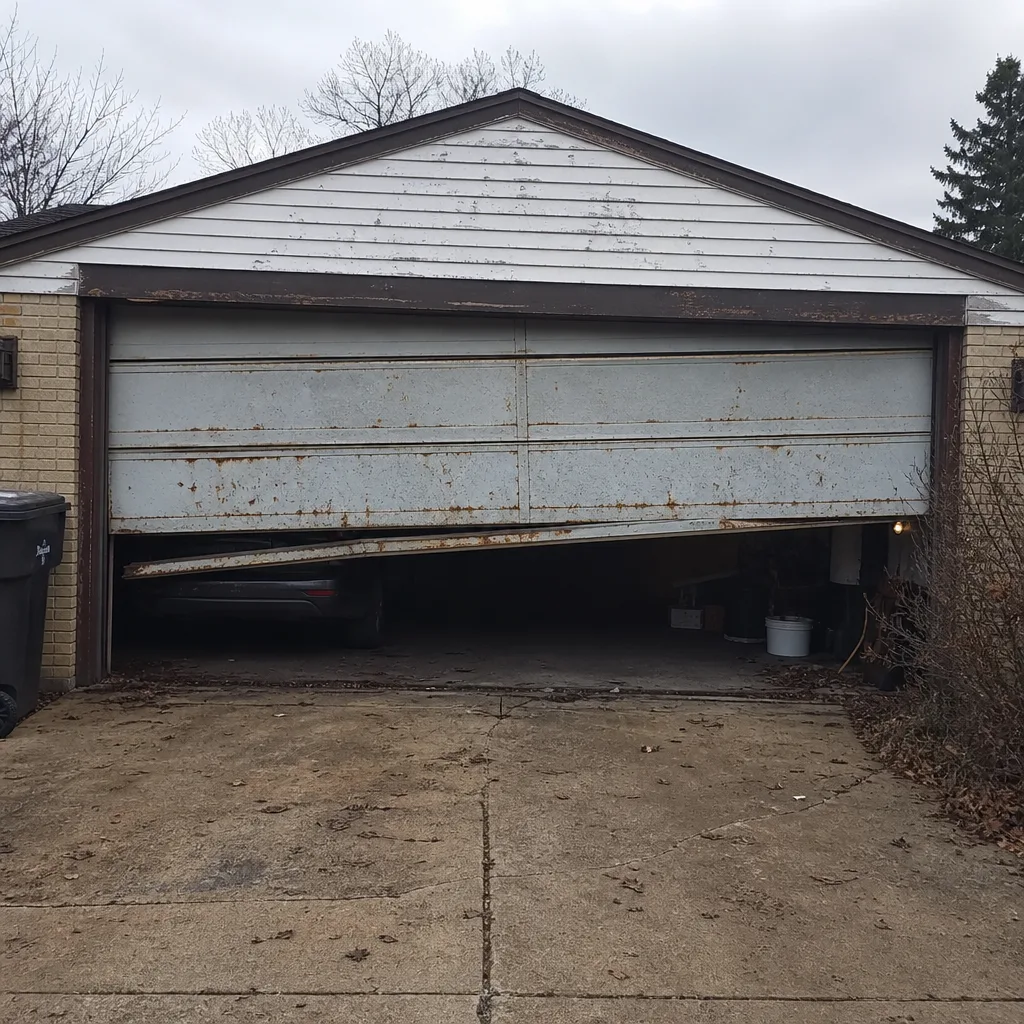 Before
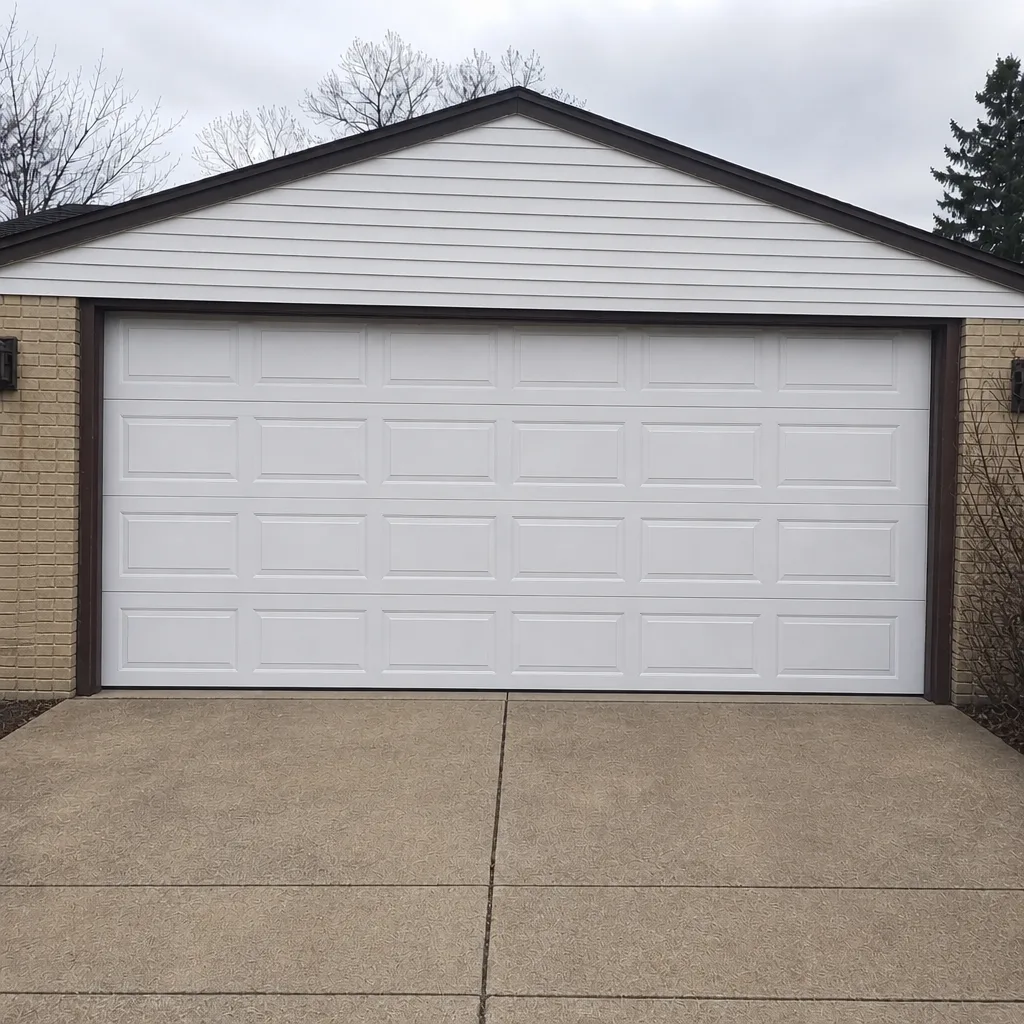 After
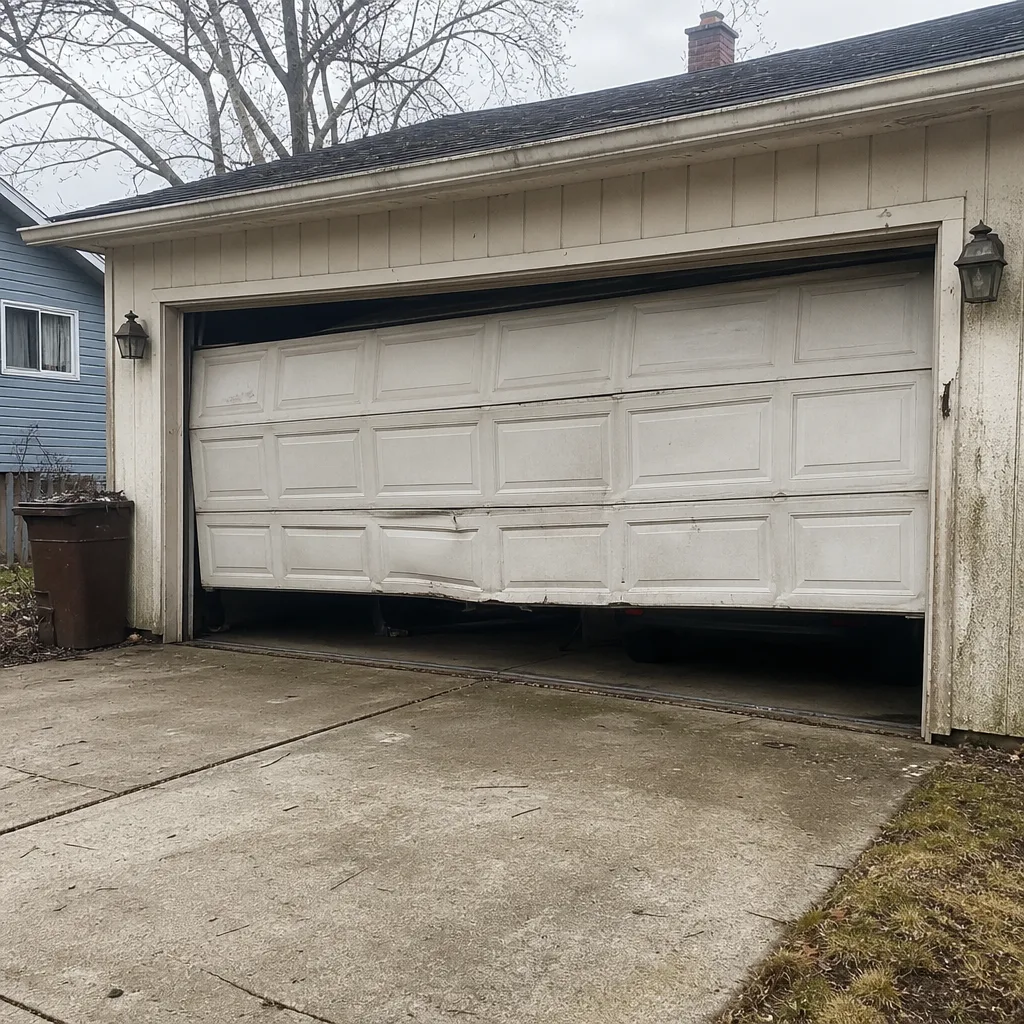 Before
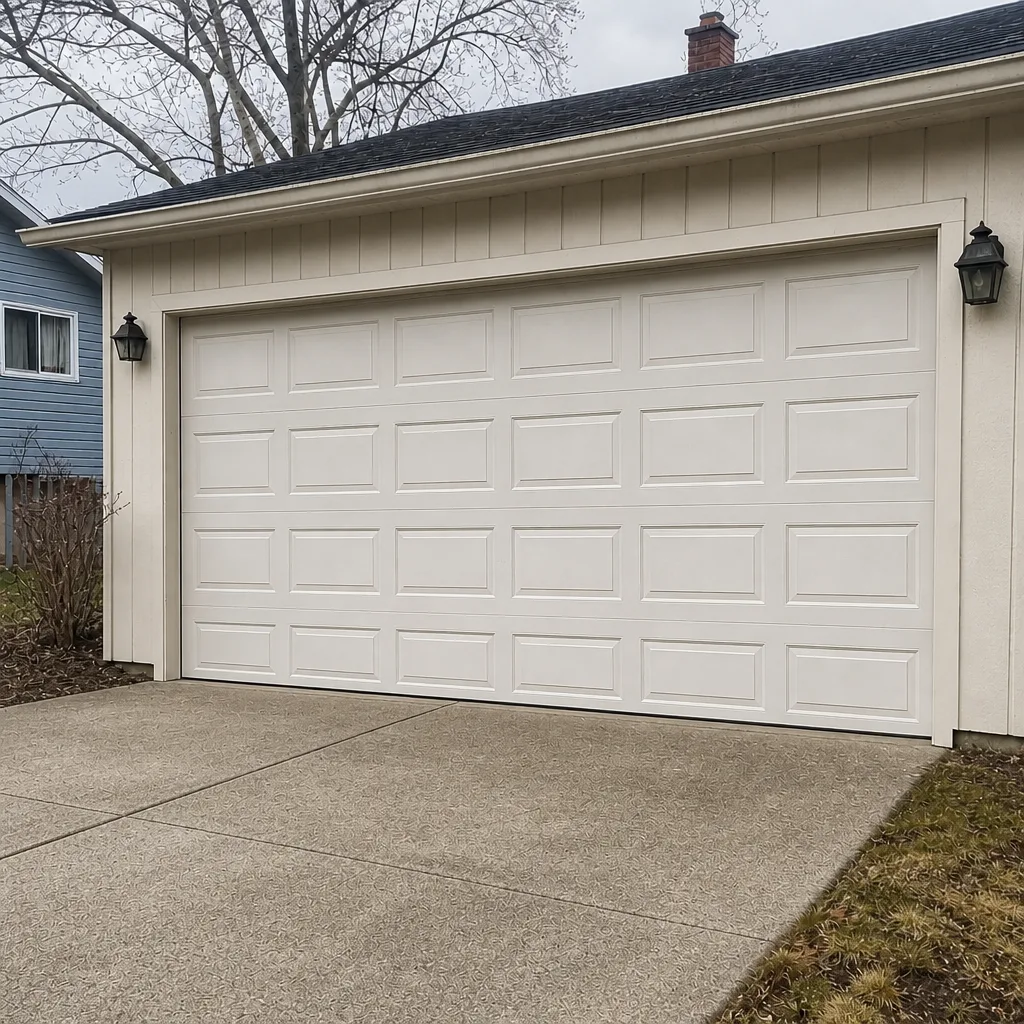 After
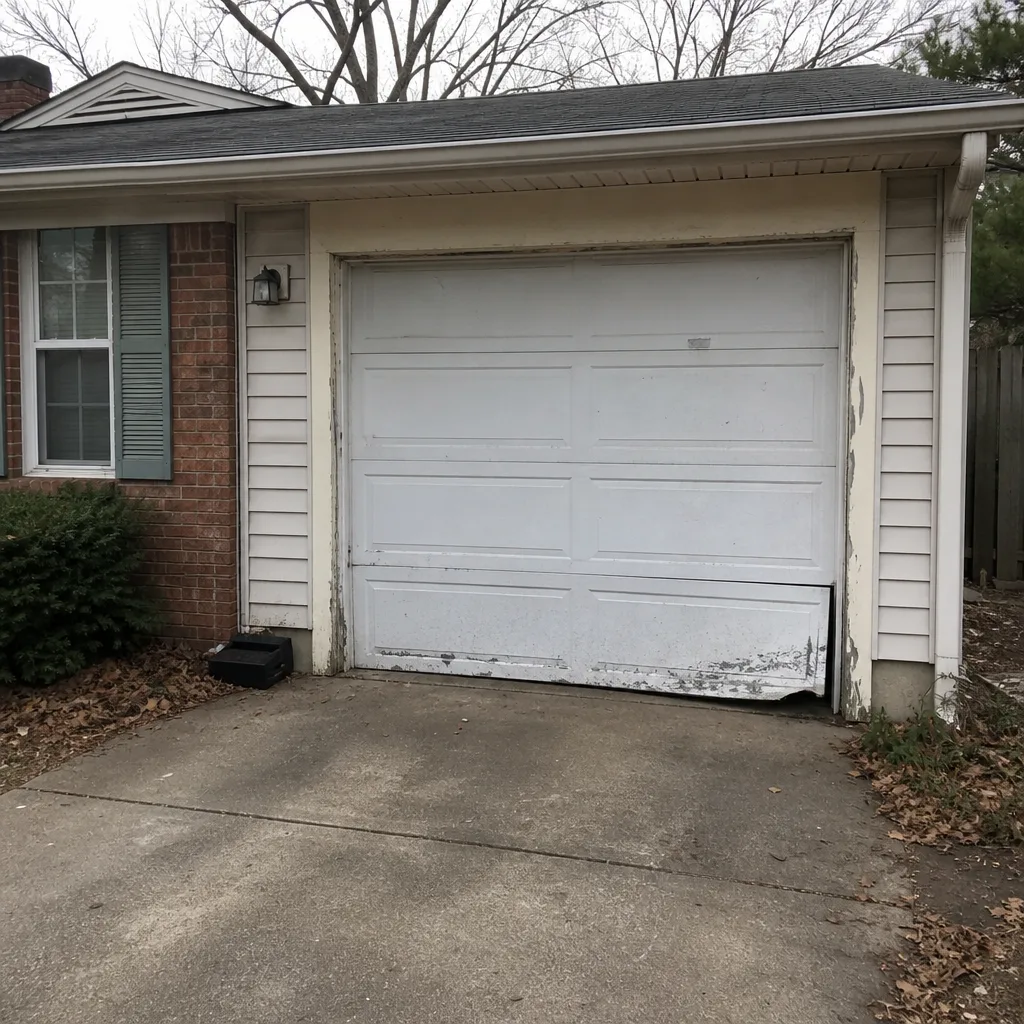 Before
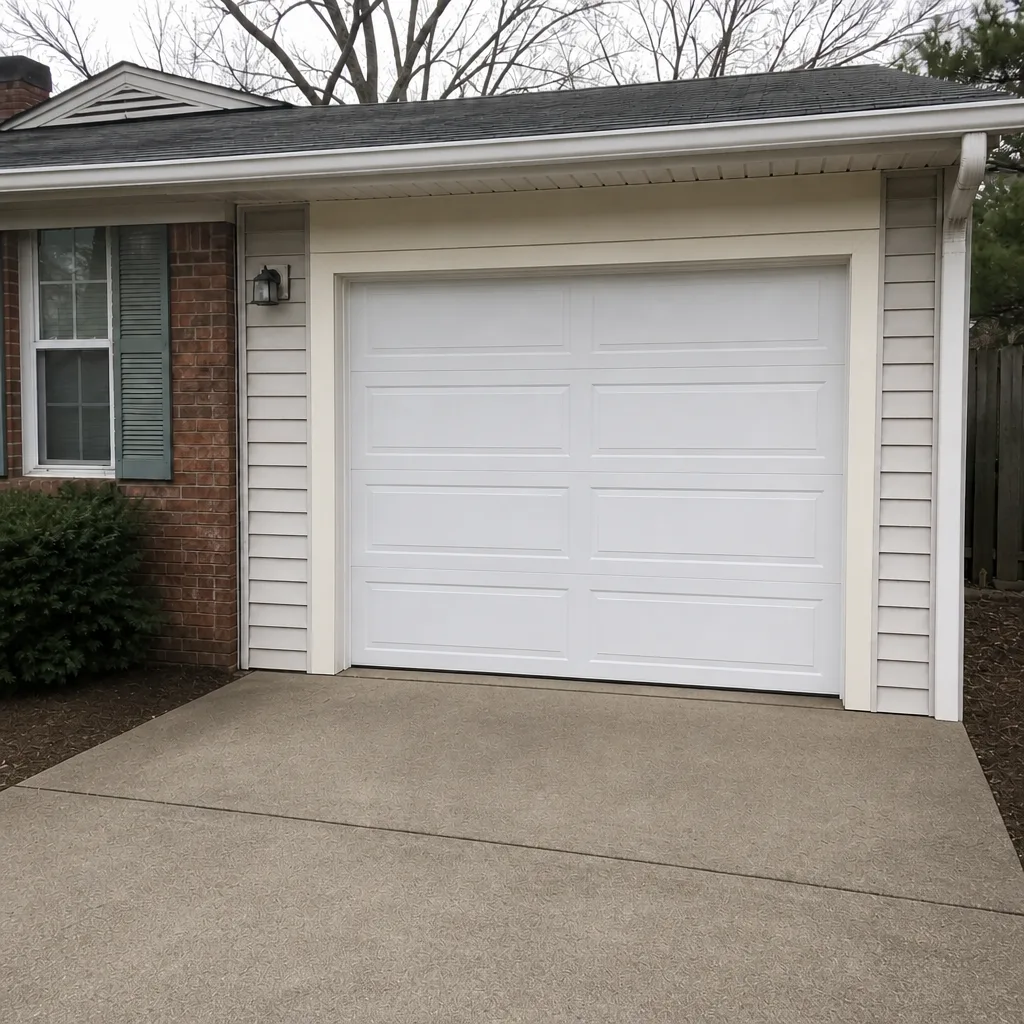 After
When to Call a Professional
Call a technician the moment you see or hear any of these: a snapped spring, a cable hanging loose or off its drum, a door that’s crooked, a door that will not lift, a door that has fallen off one track, or a garage door with stored tension anywhere in the mechanism. Call when the opener runs but the door doesn’t. Call when you’ve replaced the battery in the remote and the door still won’t respond to it. And call when you’ve tried the sensor alignment and the door still reverses. Sage Garage Door Repair offers free estimates in Ann Arbor, and our technicians have up to 12 years of experience. Call (888) 359-3230. We answer 24/7. Fast dispatch from 7am to 7pm, Sunday through Friday.
Frequently Asked Questions
Most Ann Arbor garage door repairs fall within a common range once the technician has diagnosed the problem – the written estimate you get is the price, and it’s quoted and agreed before any work starts. A single spring replacement costs less than a matched pair of springs. Cable replacement, roller and hinge work, and opener repairs vary by the brand and the parts needed. Call (888) 359-3230 for an exact quote – estimates are free.
Look and listen. A broken spring usually makes a loud bang, leaves a visible gap in the coil, and leaves the door too heavy to lift by hand. A broken cable leaves the door crooked, or the cable hanging off its drum along the side. On the manual-lift test, a heavy door that won’t stay up points to the spring; a crooked door points to the cable. Call (888) 359-3230 for a diagnosis if you’re not sure.
Yes, we offer same-day service for repair calls in Ann Arbor whenever scheduling allows. We answer 24/7 and dispatch from 7am to 7pm, Sunday through Friday. Call (888) 359-3230 to see what’s available – a call outside dispatch hours is booked into the next opening.
No, the written estimate is the price. The technician inspects the door, explains what needs to happen, and quotes a price before any work starts. If the diagnosis changes once the door is examined, you’ll hear about it before anything is done. Call (888) 359-3230 for a free estimate.
Yes, the professionals we connect you with are licensed and insured, and they specialize in garage doors rather than handling a broad range of home repairs. Our technicians have up to 12 years of experience, and we work across all the major brands including LiftMaster, Chamberlain, Genie and Clopay. Call (888) 359-3230 with any questions before you book.
Cold thickens the lubricant on rollers and hinges, and freeze-thaw cycles shift the tracks just enough to make the door bind. The door usually needs a fresh lubrication pass and possibly a track realignment. If the door feels unusually heavy rather than just stiff, treat it as a spring issue and get it looked at. Call (888) 359-3230 for an estimate.
The Bottom Line
A garage door that misbehaves is telling you something, and reading the whole door – not just the part making the noise – is the fastest way to fix it right the first time. Run the manual-lift test before you call. Keep the lubrication and safety-sensor checks in your own hands. Leave springs, cables and cable drums to a trained technician. In Ann Arbor, the freeze-thaw cycle makes hinges, rollers and tracks wear faster than in mild climates, so a fall lubrication pass and a spring check go a long way. When you’re ready for a straight answer rather than a sales pitch, Sage Garage Door Repair is here – we work on whatever brand is on your door. Visit Sage Garage Door Repair or our Ann Arbor page to book an estimate.
Call (888) 359-3230 for a free estimate. We answer 24/7. Fast dispatch from 7am to 7pm, Sunday through Friday.
Written by the team at Sage Garage Door Repair.